

XRF ICP methods are essential analytical techniques in metallurgy that help manufacturers, fabricators, recyclers, and refiners make informed decisions by providing accurate elemental analysis of precious and base metals.
Understanding the differences between these technologies is crucial for selecting the appropriate method for specific testing requirements.
Comparing XRF and ICP: Accuracy, Sensitivity, and Sample Requirements
When evaluating analytical techniques for precious metal analysis, understanding the distinct characteristics of XRF ICP methods is essential for selecting the appropriate approach. The table below compares these two techniques across key performance parameters to help determine which method best suits your specific analytical needs.
| Parameter | XRF Analysis | ICP Analysis |
| Detection Limits | Parts per million (ppm) | Parts per billion (ppb) to parts per trillion (ppt) |
| Sample State | Solid, liquid, or powder (minimal preparation) | Liquid only (requires extensive preparation) |
| Destructive? | Non-destructive | Destructive |
| Analysis Speed | Seconds to minutes | Minutes per sample |
| Chemical State Info | No | No |
| Portability | Highly portable (handheld options) | Laboratory-bound |
| Initial Cost | Moderate to high | High |
| Operating Cost | Low | High (requires argon gas, acids, etc.) |
XRF Analysis Advantages And Limitations
XRF provides rapid, non-destructive testing ideal for field applications and sample preservation.
Advantages:
- Non-destructive: Samples remain completely intact and undamaged during testing, which is vital for valuable or rare items.
- Fast results: Analysis takes only seconds or minutes, allowing for immediate on-site decisions.
- Minimal prep work: Most solid or liquid samples need little to no complex chemical preparation.
- Portability: Compact, handheld units let workers test items directly in the field or in remote locations.
- Broad range: Can detect a wide spectrum of elements, from sodium (or beryllium with specialized gear) up to uranium.

Limitations:
- Light element challenge: Standard XRF struggles or fails to accurately detect very light elements with low atomic numbers (like carbon, nitrogen, and oxygen).
- Surface-level reading: It typically analyzes only the top few microns or millimeters of a sample, missing deeper interior composition.
- No chemical state info: It reveals total elemental presence but cannot tell you how atoms bond or their oxidation state (e.g., telling Fe²⁺ apart from Fe³⁺).
- Calibration needs: Accurate quantitative measurement requires reliable calibration standards that match the sample type.
- Matrix effects: Nearby heavy elements can interfere with or mask the signals of lighter trace elements in complex mixtures.
ICP Analysis Advantages And Limitations
ICP delivers exceptional sensitivity for trace element detection, making it the method of choice for ultra-low detection limits.
Advantages:
- Multi-element capability: Tests dozens of elements at the same time from a single sample run.
- Low detection limits: Measures trace and ultra-trace concentrations down to parts per billion (ppb) or parts per trillion (ppt).
- High speed and throughput: Completes individual sample analysis in just a couple of minutes, ideal for busy labs.
- Wide dynamic range: Quantifies both major components and minor trace impurities simultaneously.
- Complex matrix versatility: Handles difficult liquid or digested solid samples efficiently.
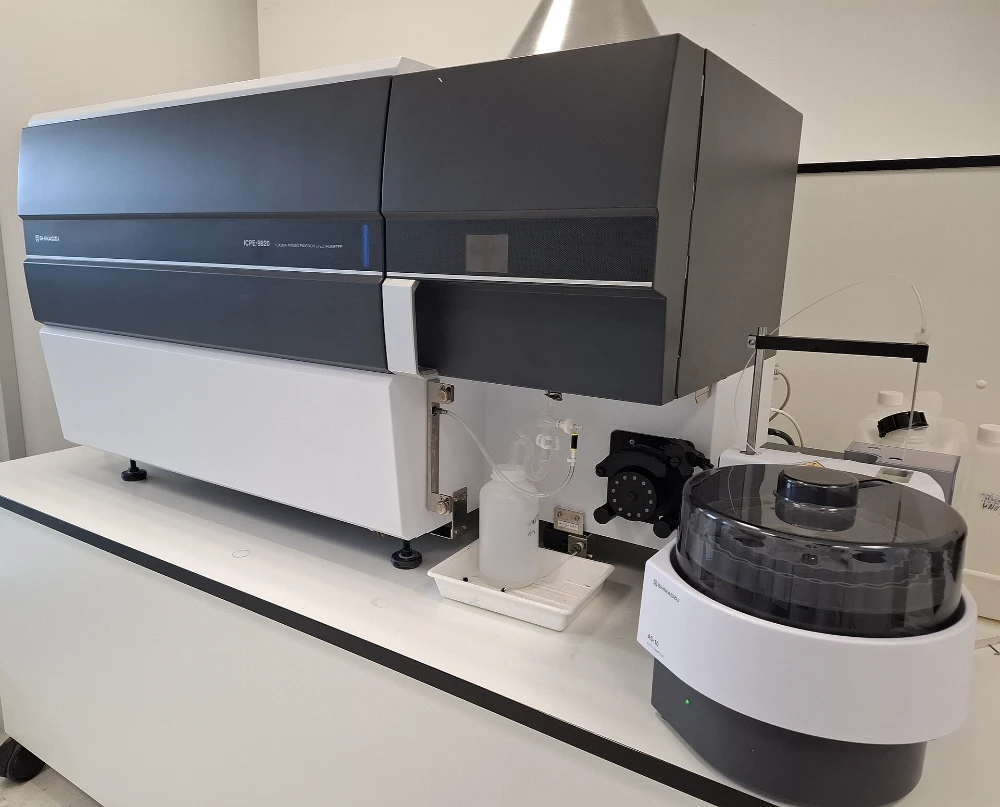
Limitations:
- High cost: Requires expensive instrumentation, continuous high-purity argon gas, and specialized maintenance.
- Destructive testing: Destroys the sample during the ionization and atomization process in the plasma torch.
- Sample state constraints: Samples generally must be liquid and properly aerosolized before introduction.
- Spectral and matrix interferences: Certain elemental combinations or dissolved solids can distort readings, requiring complex method optimization.
- Inability to test select elements: Cannot easily measure argon (the plasma gas itself) or specific non-metals/halogens without specialized configurations.
Sample Preparation Differences
The XRF ICP sample preparation requirements differ substantially, impacting workflow planning and turnaround times.
XRF Sample Preparation:
- Solid Direct Read: Can test hard items, metal pieces, or liquids as they are.
- Pressed Powder: Grinds rocks or soils into a fine dust and presses them into a small flat pellet.
- Fusion Bead: Melts the powder with a flux chemical at high heat to make a clear glass disk.
- Speed: Fast and simple, often taking only a few minutes.

ICP Sample Preparation:
- Acid Digestion: Uses strong acids (like nitric or hydrofluoric acid) and high heat to dissolve solids completely.
- Liquid Form Only: The final sample must be a clear, particle-free liquid to protect the plasma torch.
- Dilution: High-concentration liquid samples must be watered down carefully to fit the measurement range.
- Speed: Slow and labor-intensive, often taking hours to dissolve tough materials safely.
When to Choose XRF Over ICP for Metal Analysis
XRF becomes the preferred method when sample preservation, rapid results, and operational flexibility are paramount.
- Sample integrity matters: The sample must remain intact for other tests.
- Speed and throughput are critical: You need immediate answers in seconds rather than hours.
- Field or on-site testing is required: The analyzer must go directly to the scrap yard or manufacturing floor.
- Minimizing running costs is a priority: You want to avoid argon gas, acids, and hazardous waste disposal expenses.
- Concentrations are high enough: The target metal concentrations sit safely above parts-per-million (ppm) levels rather than ultra-trace parts-per-billion (ppb) ranges.

When to Choose ICP Over XRF for Metal Analysis
ICP becomes essential when analytical requirements exceed XRF’s detection capabilities, particularly for trace-level quantification.
- Ultra-Trace Sensitivity: Required when detecting impurities at ppb or ppt levels, whereas XRF bottoms out at ppm ranges.
- Liquid or Dissolved Samples: Necessary for liquid solutions like wastewater or digested environmental samples.
- Light Elements: Essential for quantifying low atomic number elements like lithium, boron, and sodium.
- High compliance & financial accuracy: Critical for legal discharge limits, product purity certifications, or high-value trade assays where minor discrepancies result in heavy penalties or financial loss.
Complementary Use of XRF and ICP in Comprehensive Metal Testing
The strategic combination of XRF ICP methods creates a powerful analytical workflow that leverages the strengths of each technique while mitigating their individual limitations. This complementary approach optimizes both analytical accuracy and operational efficiency by applying each method where it performs best.
- Initial screening: Use XRF first to sort scrap or check bulk alloy grades instantly.
- Detailed verification: Use ICP next when you need exact proof of low-level impurities or legal compliance.
- Cost savings: Save expensive lab time by testing only critical samples with ICP.
- Quality Control: Use XRF on the factory floor and ICP in the lab to double-check the work.
Ledoux & Co.’s Expert XRF and ICP Analysis Services
At Ledoux & Co., we bring over 145 years of specialized experience in metallurgical analysis, combining historical expertise with cutting-edge XRF ICP technologies. Our independent laboratory has established industry standards since 1880.
As an ISO 17025 accredited and ISO 9001:2015 certified laboratory, we maintain rigorous quality control measures ensuring reliability and accuracy in every analysis. This recognition confirms we operate at the highest technical competence, utilizing NIST-traceable standards and validated methods.

We select the appropriate analytical technique, XRF, ICP, or a combination, based on your specific material characteristics, required detection limits, and intended application. This customized approach ensures cost-effective, accurate analysis tailored to your needs.
Our expertise spans precious metals, spent and fresh catalysts, electronic scrap, and copper concentrates. We understand each material’s unique challenges and have developed specialized protocols to deliver precise, commercial-grade results.
As an affiliate member of LBMA/LPM, we uphold the strict standards required by these prestigious organizations, demonstrating our commitment to analytical excellence in precious metals analysis.
Key Takeaways
XRF ICP methods serve complementary roles, with XRF offering rapid, non-destructive screening while ICP provides superior trace element sensitivity. The choice depends on your specific material, required detection limits, and whether sample preservation is necessary.

Our ISO 17025 accredited laboratory has the expertise to recommend and perform the optimal analysis for your materials.
Partner with Ledoux & Co. for reliable, accurate XRF ICP analysis that meets your business requirements.


