
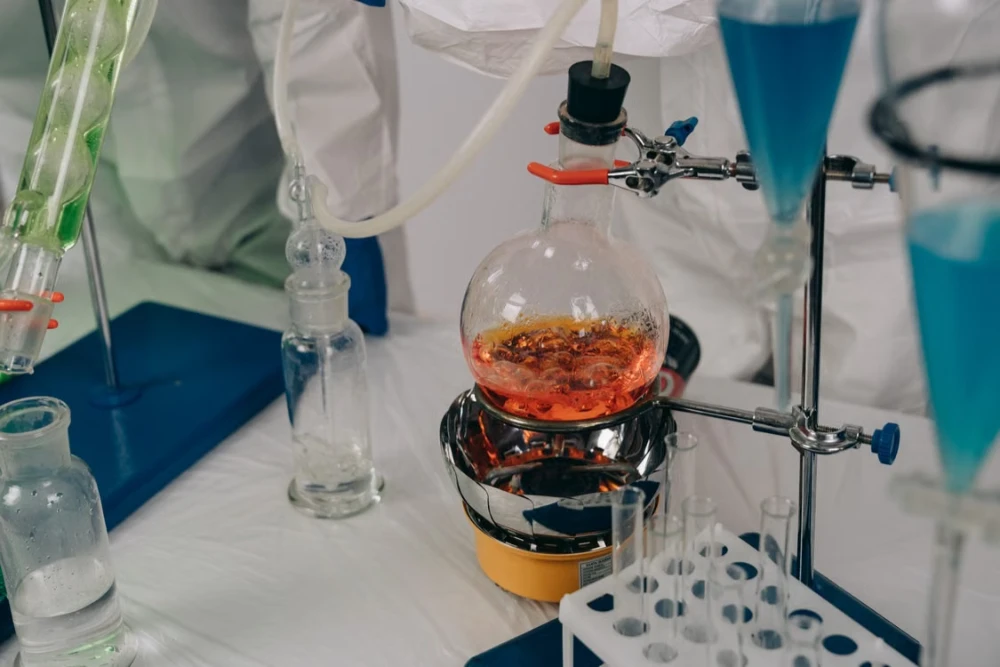
What is homogeneous catalysis? Homogeneous catalysis is a chemical process in which the catalyst and reactants share the same phase, typically liquid.
Unlike heterogeneous catalysis, where a solid catalyst occupies a separate phase, homogeneous systems mix at the molecular level. This matters to metal industry professionals because precious metals like palladium, platinum, and rhodium are often the active ingredients in homogeneous catalysts.
We define the process, explain how it works, examine industrial examples, weigh advantages and challenges, and describe our catalyst analysis support.
What Is Homogeneous Catalysis?
In practical terms, homogeneous catalysis is any catalytic system in which the catalyst and all reactants exist in the same physical phase, most commonly a liquid solution.
Because the catalyst mixes with reactants at the molecular level, it lowers the activation energy and accelerates the reaction without being consumed.
Key Features and Mechanism
Homogeneous catalysis works through direct molecular contact that produces high selectivity and a self-sustaining catalytic cycle.
- Single Phase: The catalyst, reactants, and solvent share the same physical state, typically liquid.
- Molecular Interaction: Close contact enables high selectivity and fewer unwanted side products.
- Common Catalysts: Soluble transition-metal complexes, organometallic compounds, acids and bases, and biological enzymes.
- Reactivity Cycle: The catalyst participates in intermediate steps and is chemically regenerated by the reaction’s end.
Examples of Homogeneous Catalysis
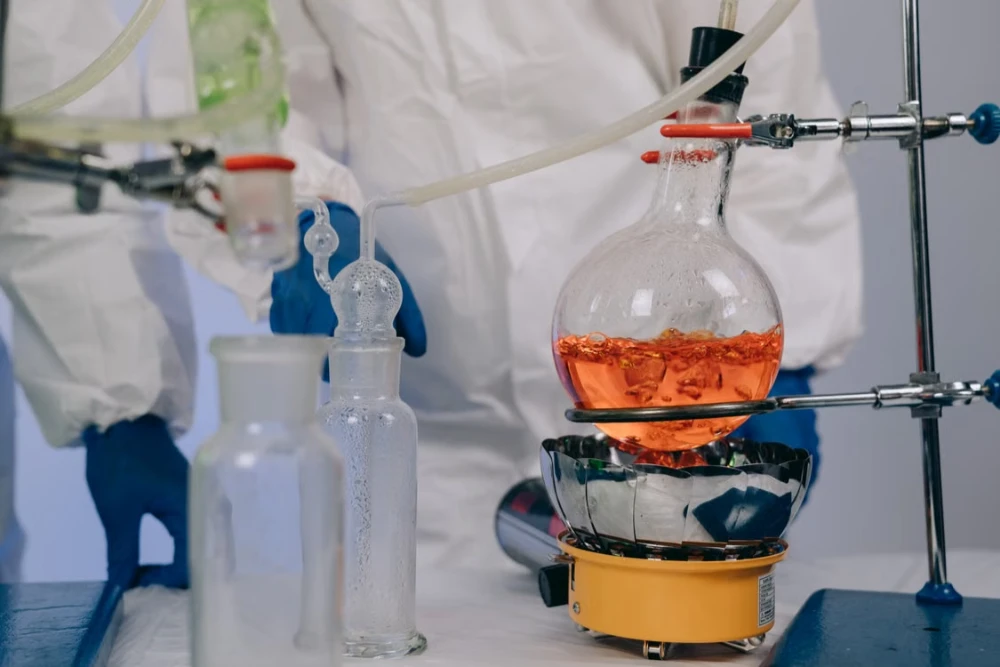
Industry applies this chemistry at an enormous scale. The Monsanto and Cativa processes use soluble rhodium or iridium complexes to catalyze methanol carbonylation into acetic acid, while hydroformylation adds carbon monoxide and hydrogen across alkenes to produce aldehydes.
The concept extends to everyday chemistry, too. In acid-catalyzed ester hydrolysis, protons released in water accelerate the breakdown of esters, while enzymes dissolved in cellular or aqueous fluid act as natural homogeneous catalysts.
Homogeneous vs. Heterogeneous Catalysis: Key Differences Explained
Homogeneous and heterogeneous catalysis differ primarily by the physical phase of the catalyst relative to the reactants. Both lower activation energy without being consumed, but they operate, separate, and scale differently.
| Characteristic | Homogeneous Catalysis | Heterogeneous Catalysis |
| Phase | Same phase as the reactants; typically one liquid solution or a gas mixture | Different phase from reactants; typically a solid catalyst with liquid or gaseous reactants |
| Mechanism | Direct molecular-level contact; metal complexes cycle through oxidation states | Surface process: diffusion, adsorption, surface reaction, and desorption |
| Activity & Selectivity | High activity, well-defined active sites, high product selectivity | Variable surface sites, generally lower selectivity; suits bulk manufacturing |
| Recovery & Stability | Difficult, costly recovery (distillation, extraction, precipitation); poorer thermal stability | Easy, low-cost recovery (filtration); good thermal stability, longer lifespans |
| Examples | Acid-catalyzed ester hydrolysis; Wilkinson’s catalyst for alkene hydrogenation | Iron in the Haber process; vanadium pentoxide (V₂O₅) in the Contact Process; Pt, Pd, and Rh in automotive converters |
Advantages and Challenges of Homogeneous Catalysis
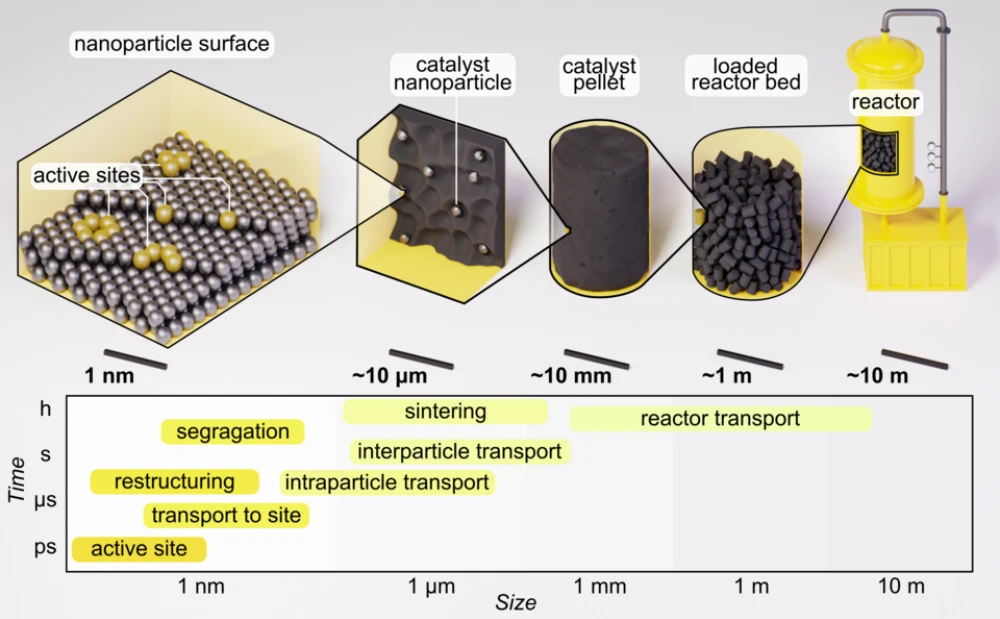
The advantages and challenges of homogeneous catalysis flow from the same source: the catalyst’s molecular intimacy with the reaction mixture. That intimacy maximizes reactor performance and complicates everything that happens after it.
Advantages of Homogeneous Catalysis
Homogeneous catalysis delivers high activity and selectivity because every catalyst site is molecularly accessible.
- High Activity and Selectivity: Molecular mixing drives higher turnover frequencies and precise control over stereoselectivity and product outcomes.
- No Mass Transfer Limitations: Reactants need not diffuse to and adsorb onto a surface, so bottlenecks disappear.
- Mild Operating Conditions: Lower temperatures and pressures reduce energy inputs for fine chemical and pharmaceutical pathways.
- Tunability: Adjusting the ligands around a metal complex fine-tunes its electronic and physical behavior.
- Easy Characterization: Spectroscopic methods such as NMR track intermediates and mechanisms directly in solution.

Challenges of Homogeneous Catalysis
The same molecular intimacy that drives performance also creates the model’s greatest weakness: recovery. When an expensive precious-metal catalyst dissolves into the product stream, separation becomes a costly, multi-step affair.
- Difficult Separation and Recovery: Distillation, extraction, or precipitation adds significant cost to every production cycle.
- Thermal Instability: Many complexes decompose at elevated temperatures, frequently limiting operations to below 200°C–250°C.
- Air and Moisture Sensitivity: Many metal-complex catalysts require Schlenk lines or inert-gas gloveboxes.
- High Cost and Waste Generation: Catalyst losses raise production costs and create environmental challenges for metal and ligand disposal.
Precious Metals in Homogeneous Catalysis
Platinum group metals (PGMs) are the preferred active ingredients in homogeneous catalysis because they combine high catalytic activity and excellent selectivity with thermal stability, chemical inertness, and variable oxidation states.
- Palladium (Pd): Cross-coupling reactions, hydrogenation, and oxidation.
- Rhodium (Rh): Hydroformylation and acetic acid production.
- Platinum (Pt): A versatile metal across many catalytic applications.
- Ruthenium and Iridium: Highly effective hydrogenation catalysts.
These metals are expensive, which makes accurate analysis and recovery economically essential.
As pharmaceutical and fine chemical manufacturers face tighter margins and stricter sustainability expectations, catalyst recycling has become a strategic priority, and its economics depend on knowing how much precious metal your spent catalysts contain.
How Ledoux & Co. Supports Your Catalyst Analysis Needs
Ledoux & Co. supports your catalyst analysis needs as an independent, ISO 17025-accredited and ISO 9001:2015-certified metallurgical laboratory with more than 145 years of experience. We are now an affiliate member of the LBMA/LPM, a distinction that reinforces the credibility of our results worldwide. Our commercial-grade assays are suitable for financial transactions and settlements and use NIST-traceable standards, backed by 45+ years of accurate PGM analysis.

Whatever your catalyst material, our accredited precious metals testing methods deliver precise results:
- Spent Automotive Catalysts: Monolith, diesel, and wash-coat analysis for exact Pd, Pt, and Rh content.
- Spent Industrial/Reforming/VAM Catalysts: Assaying for trace elements such as gold assay, silver, platinum, palladium, or rhenium content.
- Fresh Catalyst: Verification that materials meet strict specifications before use.
- Silver-Based EO Catalysts: Testing for soluble, insoluble, and total silver content.
Analysis is only half the story. Through our on-site representation services, our specialists act as your eyes and ears at processing facilities worldwide, documenting every step of weighing and sampling and treating your material like our own.
Key Takeaways
Homogeneous catalysis uses catalysts in the same phase as reactants, typically liquid. It offers high selectivity and activity but presents catalyst separation challenges.

Precious metals such as Pd, Pt, and Rh are key components with significant recovery value. Accurate analysis is essential for maximizing value in catalyst recycling.
Contact Ledoux & Co. for commercial-grade assays that protect your bottom line.


