
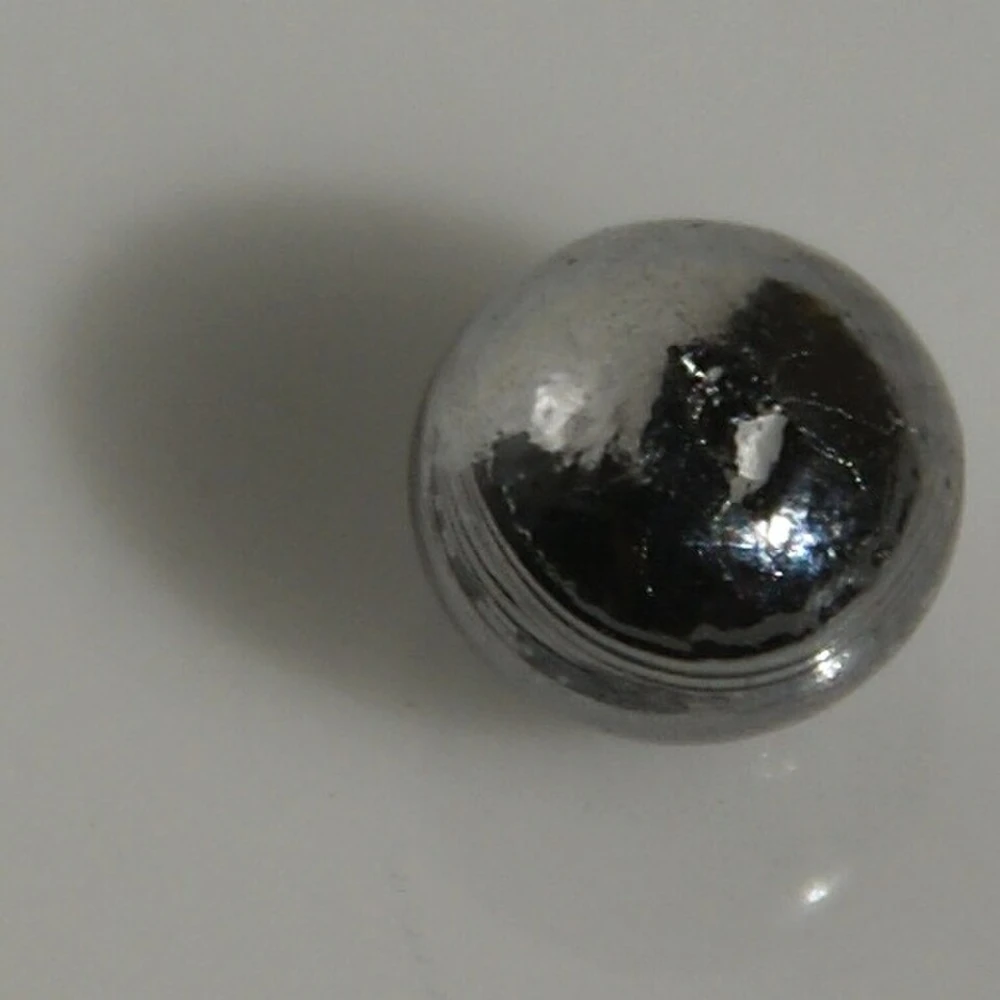
What is rhenium used for? This ultra-rare metal is indispensable in jet engine superalloys, petroleum refining catalysts, electronics, and cancer therapy.
With the third-highest melting point (3,186°C / 5,767°F), a crustal abundance below 1 part per billion, and a supply of only ~60 tonnes per year, it commands extraordinary value.
Below, we cover its properties, applications, pricing, and how our ISO 17025–accredited lab can help you quantify and recover it.
What Is Rhenium?
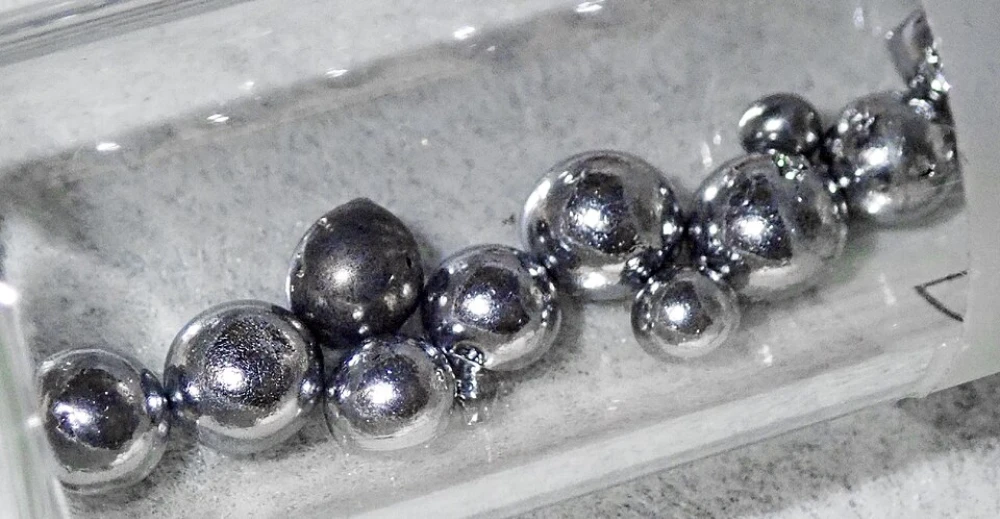
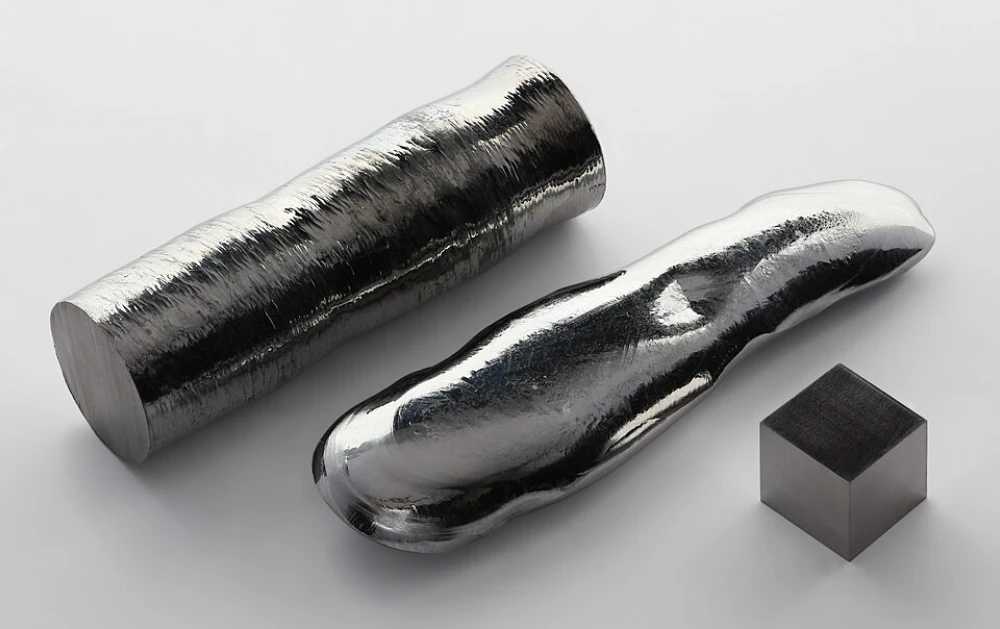
Rhenium is a dense, silvery-white refractory metal, atomic number 75. It melts at 3,182°C (5,759°F), surpassed mainly by tungsten and carbon, and boils at 5,597°C (10,110°F), the highest boiling point of any element. Its density, about 21.02 g/cm³, ranks among the densest metals.
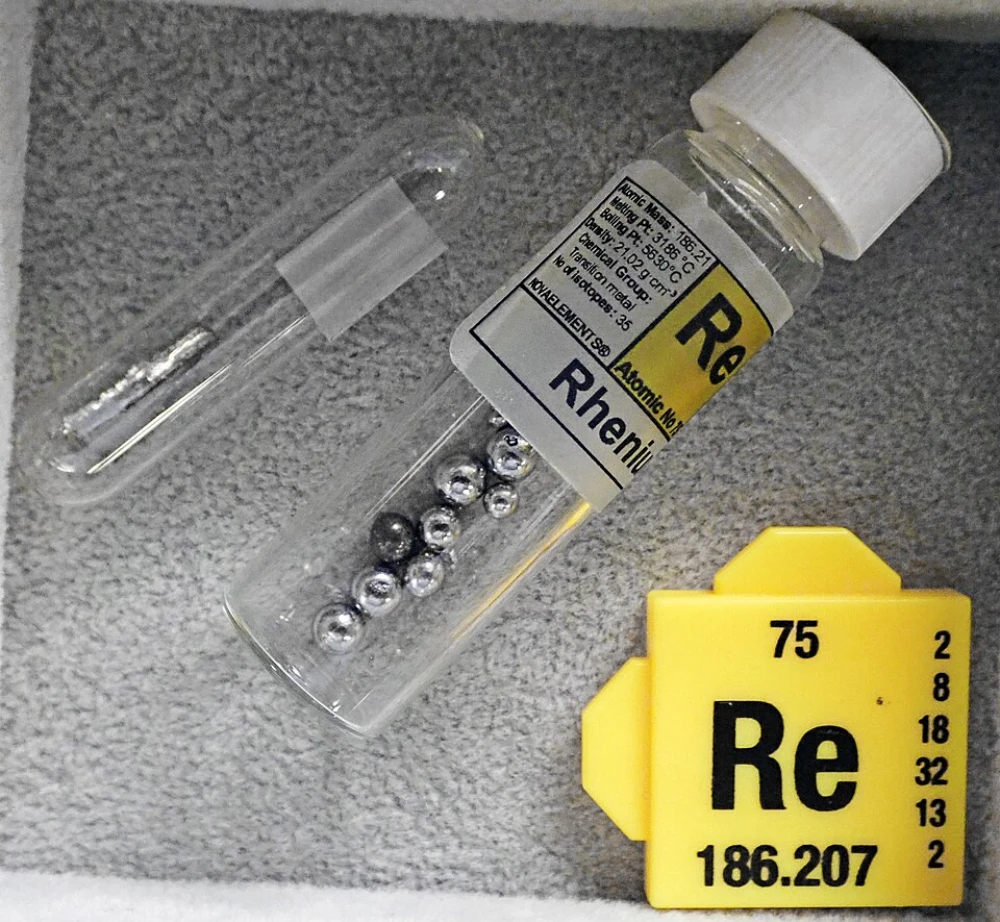
Those traits define what rhenium is used for. But with a crustal abundance of roughly 1 part per billion, rarer than gold or platinum, and no dedicated mines, supply stays exceptionally tight.
Rhenium in Aerospace Superalloys
Rhenium earns its largest use in aerospace: 70–85% of supply goes into nickel-based superalloys for turbine blades, vanes, combustion chambers, and exhaust nozzles. Added at just 3–6%, it resists creep, slow deformation under sustained heat and stress, above 1,000°C.
Think of rhenium as rebar in concrete, locking the alloy’s crystal structure in place under extreme heat:
Second-generation single-crystal alloys (~3% Re) powered the F-15 and F-16; third-generation alloys (~6% Re) fly in the F-22 and F-35.
One new jet engine can require on the order of 50 kilograms of rhenium.
Rhenium Catalysts in Petroleum Refining and Petrochemicals
What is rhenium used for in the Petro industry? Rhenium is used in refining because platinum–rhenium (Pt–Re) catalysts reform naphtha more efficiently and resist the contaminants that deactivate platinum alone:
- Share of demand: roughly 15% of consumption goes to Pt–Re reforming catalysts that produce high-octane, lead-free gasoline.
- Proven history: Chevron introduced sulfur-resistant Pt–Re catalysts during the early-1970s oil crisis; a second generation with doubled Pt–Re content raised efficiency and octane.
- Why rhenium: it resists “coking” (carbon buildup) and sulfur poisoning better than platinum alone, extending catalyst life between regenerations.
- Broader roles: hydrogenation, isomerization, and newer monometallic rhenium catalysts in fine chemicals.
- Hidden value: spent reforming catalysts hold about 0.3% rhenium by weight, small, but significant recoverable value at today’s prices.
Rhenium in Electronics and Electrical Applications
Beyond turbines and refineries, rhenium’s thermal and electrical stability suit precision components and extreme environments. Two application groups dominate.
Electronics Applications:
- Contacts and Connectors: rhenium and silver–rhenium (Ag–Re) contacts resist arcing, prevent welding, and reduce erosion in high-performance switches and relays.
- Filaments: pure rhenium and tungsten–rhenium (W–Re) wires serve in mass spectrometers, ionization devices, and vacuum tubes thanks to sublimation resistance.
- Semiconductors and Probe Needles: W–Re wires and thin films deliver durability, thermal resilience, and conductivity for probes and sensors.
Electrical Applications:
- Thermocouples: tungsten–rhenium and rhenium–iridium alloys stay stable in extreme heat, from power generation to industrial furnaces.
- Particle Detectors and Nuclear Research: W–Re wires remain stable under high voltage and radiation in detector chambers.
Rhenium in Medical Applications
Medically, rhenium works two ways: its alloys strengthen imaging and surgical equipment, while its radioisotopes treat cancer directly. Both roles rely on the element’s density and thermal shock resistance.
Imaging, Surgical Tools, and Implants:
- X-Ray Equipment: rhenium and molybdenum–rhenium (Mo–Re) alloys provide high density and thermal shock resistance for radiography components.
- Surgical Tools: ultra-fine W–Re and Mo–Re wires go into guide wires, diagnostic probes, and instruments built for high-temperature sterilization.
- Implants: emerging Mo–Re stents and orthopedic implants absorb more radiation for precise placement and improve fatigue resistance and bone-implant strength.
Radiotherapy and Cancer Treatment:
- Rhenium-188: used in radioembolization and targeted beta radiation therapy for cancer.
- Rhenium-186: used for bone pain palliation in bone metastases.
Rhenium Price, Supply, and Why Accurate Assay Matters
Rhenium’s price reflects a structural imbalance: aerospace demand keeps climbing while output cannot easily expand. In early 2026, retail prices for pure rhenium hit $6,389.30 per kilogram, with bulk trade tracking $3,770–$3,860 per kilogram.
Global mine output is limited to roughly 81,000 kilograms, recovered exclusively as a by-product of copper and molybdenum smelting, and a severe deficit persists as commercial aviation recovers and defense procurement expands.
Why Accurate Assay Matters:
- High financial stakes: at thousands of dollars per kilogram, tiny concentration differences cause massive discrepancies in transactions.
- Purity verification: aerospace superalloys demand 99.99% minimum purity; precise testing keeps deleterious trace metals from compromising turbine heat resistance.
How Ledoux & Co. Supports Rhenium Catalyst Analysis and Recovery
Whether you handle spent reforming catalysts, superalloy scrap, or any rhenium-bearing material, knowing exactly what rhenium is used for, and how much of it you have, is the first step to capturing its value.
Since 1880, Ledoux & Co. has been an independent, family-owned metallurgical laboratory, ISO 17025 accredited, ISO 9001:2015 certified, and working with NIST-traceable standards. We’re also a proud LBMA/LPPM Affiliate Member as an Assayer, aligned with the London bullion market’s recognized standards.

We assay spent industrial, reforming, and VAM catalysts for trace gold, silver, platinum, palladium, and rhenium, so you know your material’s value before selling, processing, or recycling. Our commercial-grade assays support financial transactions, umpire work, and contract settlements, backed by 45+ years of PGM analysis.
Precious metals testing spans bullion to trace levels via fire assay, ICP, and titration, and our rare earth element testing covers ores, concentrates, separated REOs, and industrial products.
On request, our on-site representatives act as your “eyes and ears” worldwide, documenting every step, including LOI and LOD conditions, to eliminate material loss, quality variation, and theft.
Key Takeaways
What is rhenium used for? Rhenium’s extreme heat resistance, catalytic activity, and rarity make it indispensable, and increasingly expensive, across aerospace, refining, electronics, and medicine.
With supply tight and prices rising, accurate analysis of rhenium-bearing materials has never been more valuable. Whether you’re a refiner, recycler, or manufacturer, you need assay results you can stand behind.

With 145+ years of expertise, ISO 17025 accreditation, and LBMA affiliate membership, we’ll help you capture that value. Contact Ledoux & Co. today.


