
Homogeneous vs heterogeneous catalyst selection starts with a question: does the catalyst share a phase with the reactants? The answer affects how molecules meet, products separate, and catalyst material is recovered. Both approaches support industrial production.
For operations teams, the distinction also changes equipment and downstream material accounting. This homogeneous vs heterogeneous catalyst guide compares mechanisms, trade-offs, applications, and testing needs against requirements.
Homogeneous vs Heterogeneous Catalyst: Key Differences
A homogeneous catalyst operates in the reactants’ phase, commonly dissolved in liquid. A heterogeneous catalyst occupies another phase, commonly a solid contacted by liquids or gases. The distinction describes the operating system, not its metal content.
| Decision factor | Homogeneous catalyst | Heterogeneous catalyst |
| Typical form | Dissolved molecule or complex | Solid metal, oxide, or supported material |
| Reaction location | Throughout one phase | Accessible surface sites |
| Product separation | Often requires a dedicated separation step | Often allows filtration or a fixed bed |
| Main constraint | Retaining catalyst while purifying product | Reactant access and surface deactivation |
The homogeneous vs heterogeneous catalyst differences shown here are tendencies, not guarantees. A tailored solid can be selective, while a dissolved catalyst may lose activity. Compare performance under the intended feed, temperature, and cycle. Sampling plans should reflect that difference: dissolved metal may follow product streams, while a solid bed may vary between inlet and outlet.
What Is a Homogeneous Catalyst?
A homogeneous catalyst shares the reactants’ phase. A soluble metal complex may interact with dissolved molecules, form intermediates, release product, and return to an active state. Its ligands, molecules bonded to the metal, can influence product formation.
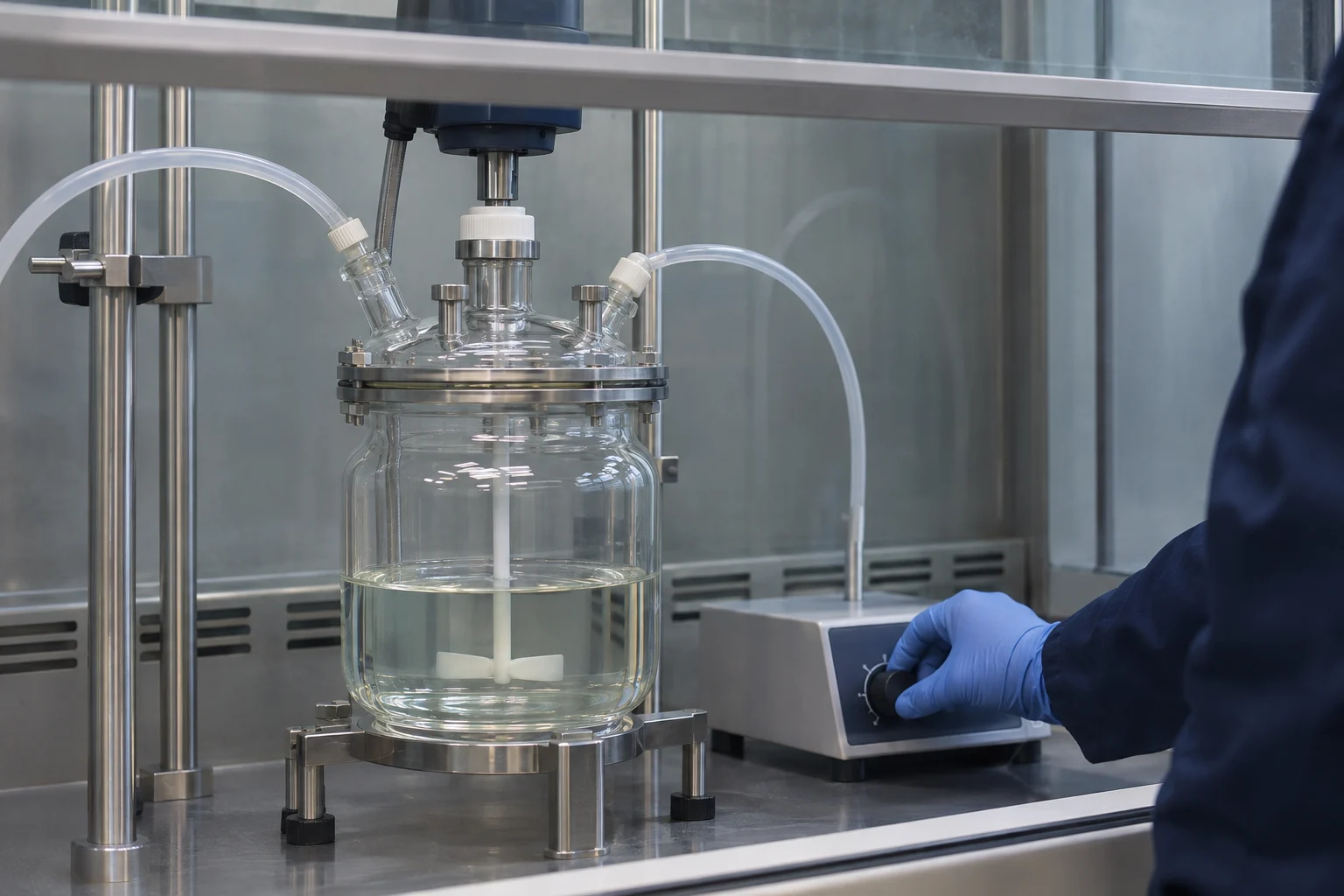
This control helps when selectivity matters. Active species can also move throughout the reaction liquid, making contact with dissolved reactants. The catalyst may leave with the product unless extraction, membrane separation, or another method recovers it.
Consider solvent compatibility, stability, and residual metal limits. Laboratory results may not translate directly to continuous operation.
What Is a Heterogeneous Catalyst?
A heterogeneous catalyst works in a distinct phase. Metal or metal oxide may sit on a solid support while reactants pass over its surface. Reactants reach active sites, attach to the surface, react, and leave as products. Accessible surface matters more than total metal mass.

The solid can remain in a fixed bed or be separated by filtration. Pore transport can limit reaction rate. Support chemistry and pore size influence which molecules reach active sites, especially in mixed feeds.
Deposits, particle fusion, and poisons reduce available sites. Easy separation does not guarantee continued effectiveness.
Advantages and Disadvantages of Each Catalyst Type
For homogeneous vs heterogeneous catalyst selection, compare selectivity, separation, stability, and operating cost. The table shows tendencies; performance depends on the formulation and process.
| Catalyst type | Potential advantage | Practical limitation |
| Homogeneous | Tunable molecular environment and useful selectivity | Product purification and catalyst recovery can be complex |
| Heterogeneous | Easier physical separation and continuous operation | Surface access, fouling, and transport can constrain performance |
For a homogeneous system, control of a metal center may improve yield. That benefit must justify solvent handling, separation equipment, and metal losses. Validate recovery for the actual product mixture.
For a heterogeneous system, a solid bed simplifies separation and reuse. Activity falls if contaminants block sites or particles change. Compare metal loss per cycle. Assess conversion and selectivity alongside catalyst life, regeneration, and residual metal value.
Industrial Applications of Homogeneous and Heterogeneous Catalysts
Soluble rhodium complexes are used in hydroformylation, converting alkenes into aldehydes. Molecular selectivity may justify complex recovery. Homogeneous catalysts also support fine chemical and pharmaceutical reactions where product structure matters.
Heterogeneous systems include iron in ammonia synthesis, supported precious metals in automotive exhaust treatment, and silver in ethylene oxide production. Each depends on access to solid active sites. For example, automotive converters expose flowing exhaust to a coated support. An immobilized molecular catalyst may combine defined sites with easier separation, although support attachment can change behavior. Choose by process, not metal name.
How to Choose Between Homogeneous and Heterogeneous Catalysts
Start with the required product, then compare candidate systems under realistic operating conditions. A selection review should cover:
- Target conversion, selectivity, and product purity.
- Feed composition, including likely catalyst poisons.
- Temperature, pressure, and solvent compatibility.
- Batch or continuous operation and separation equipment.
- Catalyst lifetime, metal losses, and recovery costs.
These factors interact. A highly selective dissolved catalyst may be economical if metal retention is effective; a reusable solid may be preferable when simple separation matters. Pilot data should test the full operating cycle, including startup, shutdown, cleaning, waste handling, and spent material management. Avoid assuming that one promising metric predicts the total cost of ownership.
Why Catalyst Analysis Matters
Composition verifies fresh material and characterizes spent catalyst, but does not measure reaction performance. For precious metal systems, check loading, relevant impurities, and service changes. Sulfur, lead, or phosphorus may affect certain formulations.
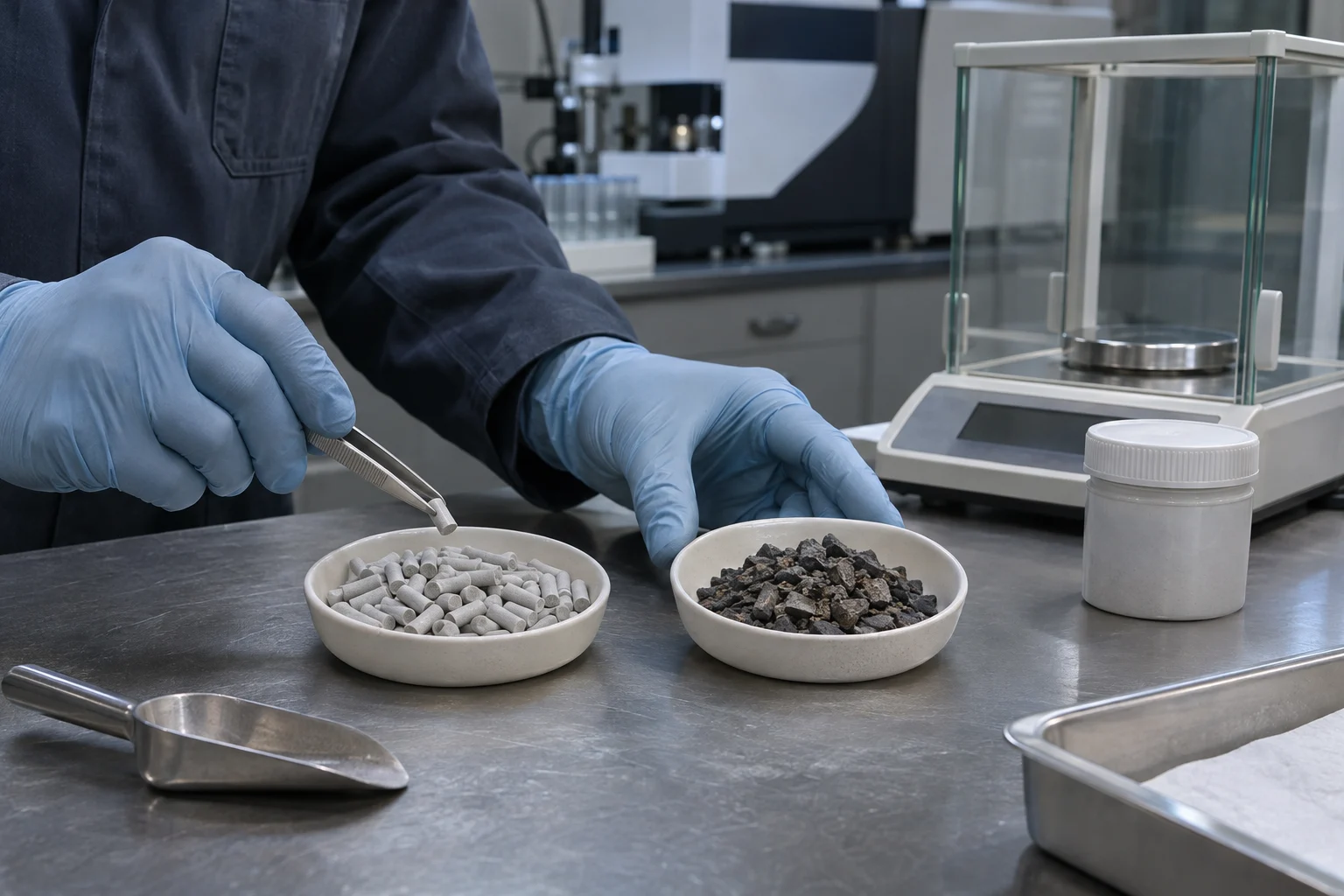
Representative sampling is essential when metals are unevenly distributed. An assay can inform specification checks or recovery decisions, while reactor tests establish conversion and selectivity. Specify whether the decision requires screening or a quantitative assay suitable for a settlement.
Ledoux & Co.’s Catalyst Testing service analyzes precious metal-bearing catalysts. Explore Catalyst Testing when you need an independent measurement matched to your material and decision.
How Ledoux & Co. Supports Catalyst Testing (70 words)
Ledoux analyzes fresh and spent automotive, industrial, reforming, and silver-based ethylene oxide catalysts for precious metal content. Independent assays support verification and recycling settlements. Its applicable methods are ISO 17025 accredited; sampling, inspection, and analysis are ISO 9001:2015 certified.
Methods and preparation must match the material and reporting purpose. An assay establishes composition; reactor testing remains necessary to establish catalytic performance under actual operating conditions. To discuss a lot, submit a sample with its description and requested elements.
