
Rhodium and silver look similar, but their industrial roles differ substantially. Rhodium is a scarce platinum group metal valued for catalytic activity and corrosion resistance. Silver is a highly conductive metal used across electrical products, manufacturing, and investment markets.
For refiners and procurement teams, the useful rhodium vs silver question concerns performance, recoverable content, and assay requirements, not color alone. The right comparison begins with what the material actually contains.
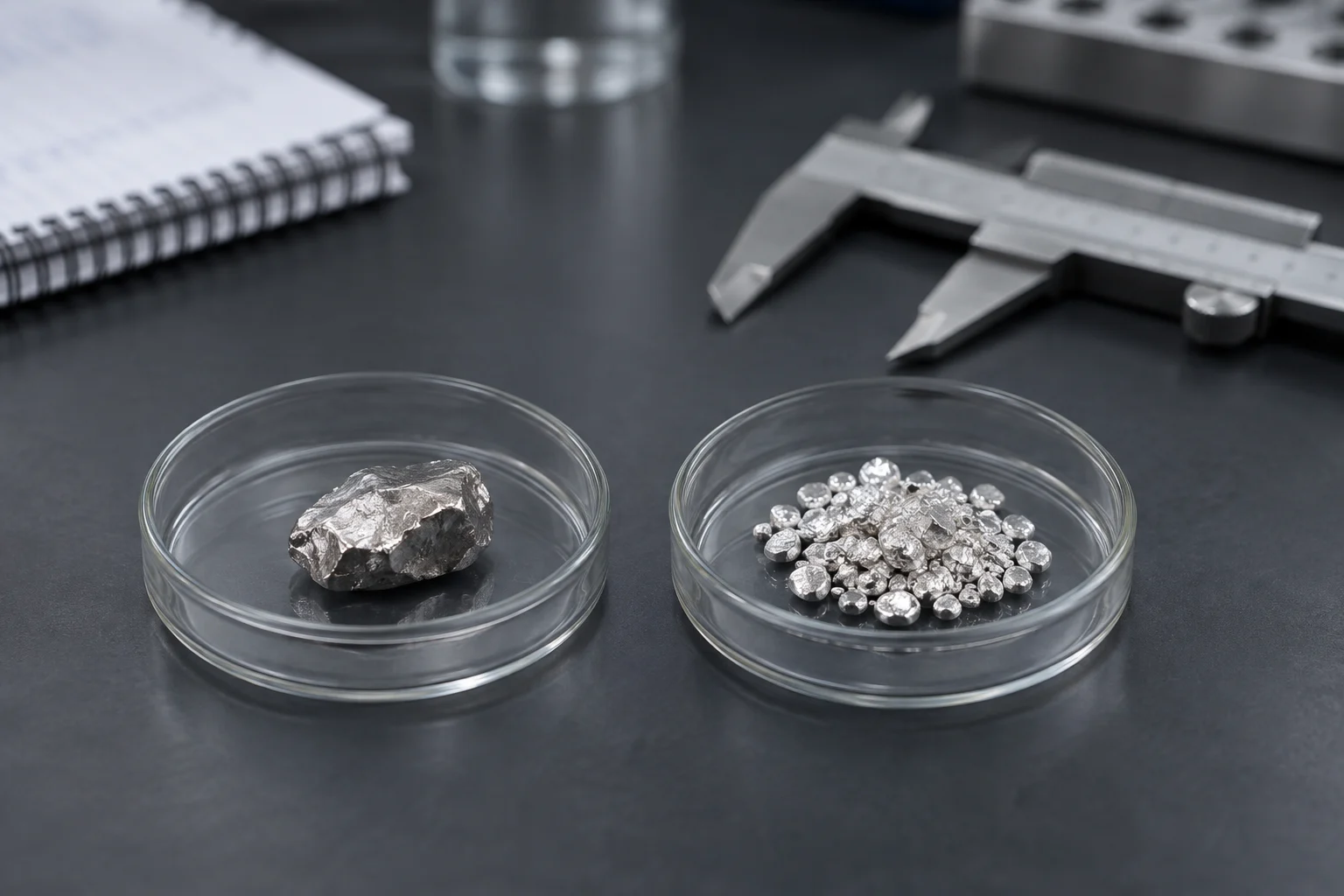
Rhodium vs Silver Comparison at a Glance
Rhodium and silver are distinct elements. Rhodium (Rh) belongs to the platinum group metals. Silver (Ag) is a separate precious metal with a much broader range of bulk uses. Both can look white and reflective, and a thin rhodium coating can conceal a silver substrate. Appearance therefore cannot establish composition.
| Factor | Rhodium | Silver |
| Typical industrial role | Automotive and chemical catalysts; protective coatings | Electrical contacts, photovoltaic products, alloys, and catalysts |
| Relative hardness | Harder and less workable | Softer and readily formed |
| Conductivity | Conductive, but below silver | Exceptional electrical and thermal conductivity |
| Surface behavior | Strong corrosion resistance | Can tarnish through surface sulfide formation |
| Commercial consideration | Scarce supply and specialized recovery | Broader production and more established physical markets |
This rhodium vs silver comparison guides material selection. Plated components, catalysts, alloys, and mixed scrap require representative sampling and analysis to estimate contained metal.
Rhodium vs Silver Physical Properties
The two metals differ in hardness, conductivity, and surface behavior. In a rhodium vs silver comparison, those properties matter when selecting a catalyst, contact, coating, or feedstock for recovery. They do not establish the composition of an unknown finished item.
Rhodium and Silver Composition and Sourcing
Rhodium is a platinum group metal commonly recovered alongside other metals rather than mined primarily for its own sake. Supply may respond slowly to demand. Silver also occurs with other mined metals but enters larger and more varied commercial streams.
A small fraction containing rhodium can matter economically, while silver often appears in larger quantities across industrial residues. Neither metal’s presence can be inferred from scrap type alone. Coatings and mixed inputs can change the content of a lot.
Hardness, Conductivity, and Corrosion Resistance
For material selection, three differences matter:
- Hardness: Rhodium is harder than silver. Its durability supports coatings and contact surfaces.
- Conductivity: Silver conducts electricity and heat exceptionally well and is easier to form for electrical components.
- Surface behavior: Silver can darken when sulfur compounds form silver sulfide. Rhodium resists this type of tarnish.
Buyers should specify whether the application requires conductivity, surface protection, catalytic behavior, or a combination. A coating changes surface performance, but it does not change the underlying metal’s identity.
Industrial Uses of Rhodium and Silver
Comparing rhodium vs. silver uses shows why these metals serve different purposes. Performance requirements, operating conditions, and the amount of metal needed determine which one belongs in a product or recovery stream.

Rhodium Uses: Catalysts, Contacts, and Coatings
Rhodium serves several industrial roles:
- Automotive catalysts: It helps reduce nitrogen oxides in exhaust.
- Chemical catalysts: It participates in production processes.
- Contacts and equipment: Its corrosion resistance supports electrical contacts and high-temperature applications.
Spent catalysts can contain low rhodium concentrations, making measurement important for recovery. Appearance cannot establish a lot’s metal content.
Ledoux & Co.’s Catalyst Testing service analyzes rhodium in spent automotive catalysts using methods within its accredited scope. Learn More About Catalyst Testing if your lot needs independent results for settlement.
Silver Uses: Electronics, Manufacturing, and Catalysts
Silver’s exceptional conductivity and workability support several commercial uses:
- Electronics: Electrical contacts and printed circuitry use its conductive properties.
- Manufacturing: Photovoltaic products, mirrors, and brazing alloys use silver.
- Catalysts: Silver supports ethylene oxide production, a distinct catalytic function.
Silver enters recycling streams as bulk metal, coating, or dispersed catalyst content. Mixed scrap may contain uneven concentrations of metals, while a spent catalyst may hold silver throughout its support. Appearance alone cannot identify the appropriate analytical or processing method.
Is Rhodium More Valuable Than Silver?
In a rhodium vs silver price comparison, rhodium generally commands a higher price per unit mass. A quoted price, however, is only one part of a commercial decision. Compare quotations by mass and distinguish refined metal prices from payable scrap values.
For a lot, examine:
- Contained mass: How much rhodium or silver does representative analysis establish?
- Recoverability: What fraction can the chosen process realistically recover?
- Transaction terms: What processing charges, deductions, and settlement rules apply?
Rhodium trading can be less liquid than silver trading; prices change over time. A large lot containing silver may be worth more in total than a small sample containing rhodium. Conversely, rhodium traces may matter in a catalyst settlement. A surface coating does not make an item rhodium; measured content remains essential.
How Ledoux Verifies Rhodium and Silver Purity
Screening can suggest which elements are present, while quantitative assays measure content. X-ray fluorescence, or XRF, reads a limited surface area. A silver item bearing rhodium can therefore produce a surface-dominated result that does not describe its bulk composition. Uneven metal distribution further complicates scrap and catalysts.

For settlement or recovery, use a representative sampling plan and an analytical method suited to the matrix and target elements. Inductively coupled plasma analysis, or ICP, can quantify selected metals after appropriate preparation. Results should state the sample basis, units, and method scope. An accredited result cannot correct unrepresentative sampling.
Ledoux provides independent analysis for ores, concentrates, and recycled materials. Its Precious Metals Analysis service lists silver and rhodium and helps clients establish content for settlement or verification. The method depends on material type, preparation, and target elements; ISO 17025 accreditation applies within its stated scope. Reliable decisions start with a representative sample and defined reporting needs. Submit a Sample with its description and requested elements.
