
The question “what is the most expensive metal?” sounds simple until refined metal and a mixed scrap lot receive different quotes. The answer also changes when a list includes laboratory-produced isotopes.
For procurement teams, the useful question is which metal has a verifiable market quotation and how much of it a given material actually contains. This guide separates traded metals from synthetic materials, explains why rankings move, and connects price to assay results.
What Is the Most Expensive Metal in the World?
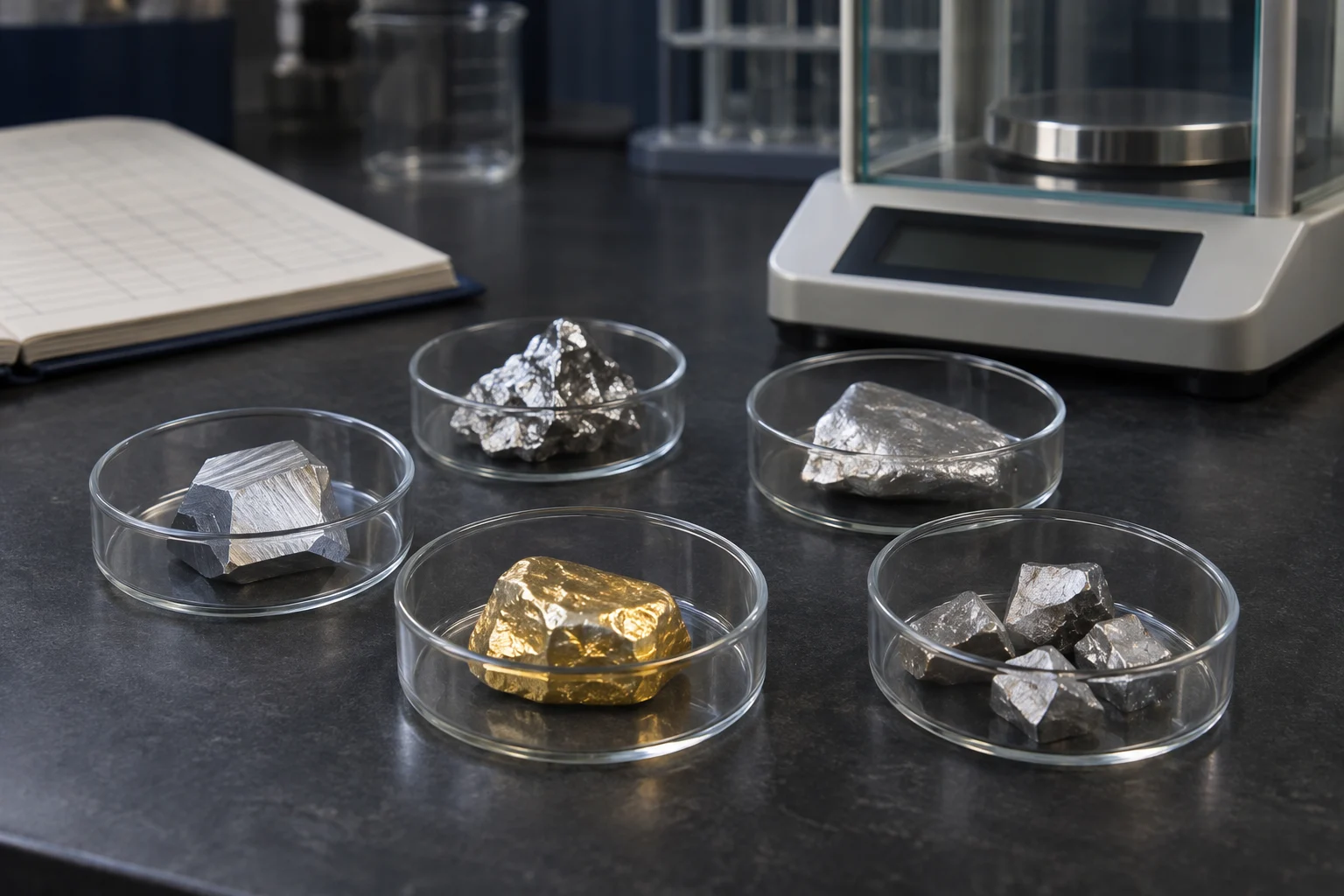
Among commercially quoted metals, iridium and rhodium often occupy the two highest quoted positions, usually well above gold. Their exact order depends on the date, material form, and dealer quotation. Reactor-produced isotopes such as californium-252 can have far higher procurement costs, but they lack ordinary transparent open-market metal prices.
Most Expensive Metals List
This order reflects recent dealer indicative quotations, not a permanent hierarchy. Check the date and unit before using any ranking.
- Iridium: Limited supply and specialized industrial demand can place it above other quoted metals.
- Rhodium: Automotive emissions control demand meets constrained platinum group metal supply.
- Gold: Investment and fabrication demand support a deep, widely quoted market.
- Ruthenium: Demand in electronics and other technical applications can lift this smaller market.
- Platinum: Automotive, chemical, and jewelry demand compete for mine and recycled supply.
- Palladium: Catalytic converters remain important, although substitution and vehicle demand affect its position.
- Osmium: Thin trading and product-specific quotations make a dependable comparison difficult.
A numbered list cannot guarantee a transaction price. Quotations differ by purity, quantity, and form. Osmium is included for completeness, but its position is especially uncertain because comparable public reference prices are limited.
Traded Metals vs Synthetic Elements
To answer what is the most expensive metal, the word expensive needs a boundary. Refined metals with quotations can be compared on a common date and mass basis. Reactor-produced isotopes require separate treatment because their costs reflect production.
Most Expensive Commercially Traded Metals
Platinum group metals, or PGMs, include rhodium, iridium, ruthenium, platinum, palladium, and osmium. Several appear near the top of metal price lists because supply is limited and demand is concentrated in demanding industrial applications. Gold also belongs in the comparison, but its more liquid market works differently.
When checking a ranking, specify whether the figure is a purchase price, sale price, or indicative dealer quotation. Compare identical units and material forms. A quote for refined metal cannot be applied directly to an ore, catalyst, or scrap lot.
Most Expensive Metal per Gram: Synthetic Elements
Californium-252 is a reactor-produced radioactive isotope, not a mined metal sold through an ordinary commodity market. Historical U.S. Department of Energy records describe distribution in tiny quantities and substantial procurement costs. Converting those costs to a per gram figure creates a striking comparison, but it does not establish a spot price for a freely traded gram.
Production, encapsulation, handling, and transport can all affect the amount charged. Other synthetic isotopes present similar problems. Keep them outside a ranking intended to guide precious metal purchasing or material settlement.
What Makes a Metal Expensive?
Metal prices reflect the balance between available supply and willing buyers. Extraction, refining, recycling, and delivery add costs. For smaller platinum group metal markets, a change in supply or industrial demand can shift quotations quickly.
Concentrated Supply Across Precious Metals
Platinum group metal production is geographically concentrated, and several metals are recovered alongside platinum, nickel, or copper. A miner cannot always increase rhodium or iridium output simply because its price rises; production may depend on the economics of another metal. Mine disruptions, energy constraints, and processing bottlenecks can tighten availability.
Recycling provides additional supply, but recovering metal from spent catalysts or other complex material takes time and accurate sampling. Buyers should therefore distinguish an immediate shortage of refined metal from the theoretical metal content of material still awaiting processing.
Industrial Demand
Industrial demand can change the relative positions of metals on a price list. Automotive emissions systems use platinum group metals, while electronics, chemicals, and hydrogen technology create demand. Engineering changes can shift the amount or mix of metals used in a catalyst; regulation and vehicle technology can change total demand.
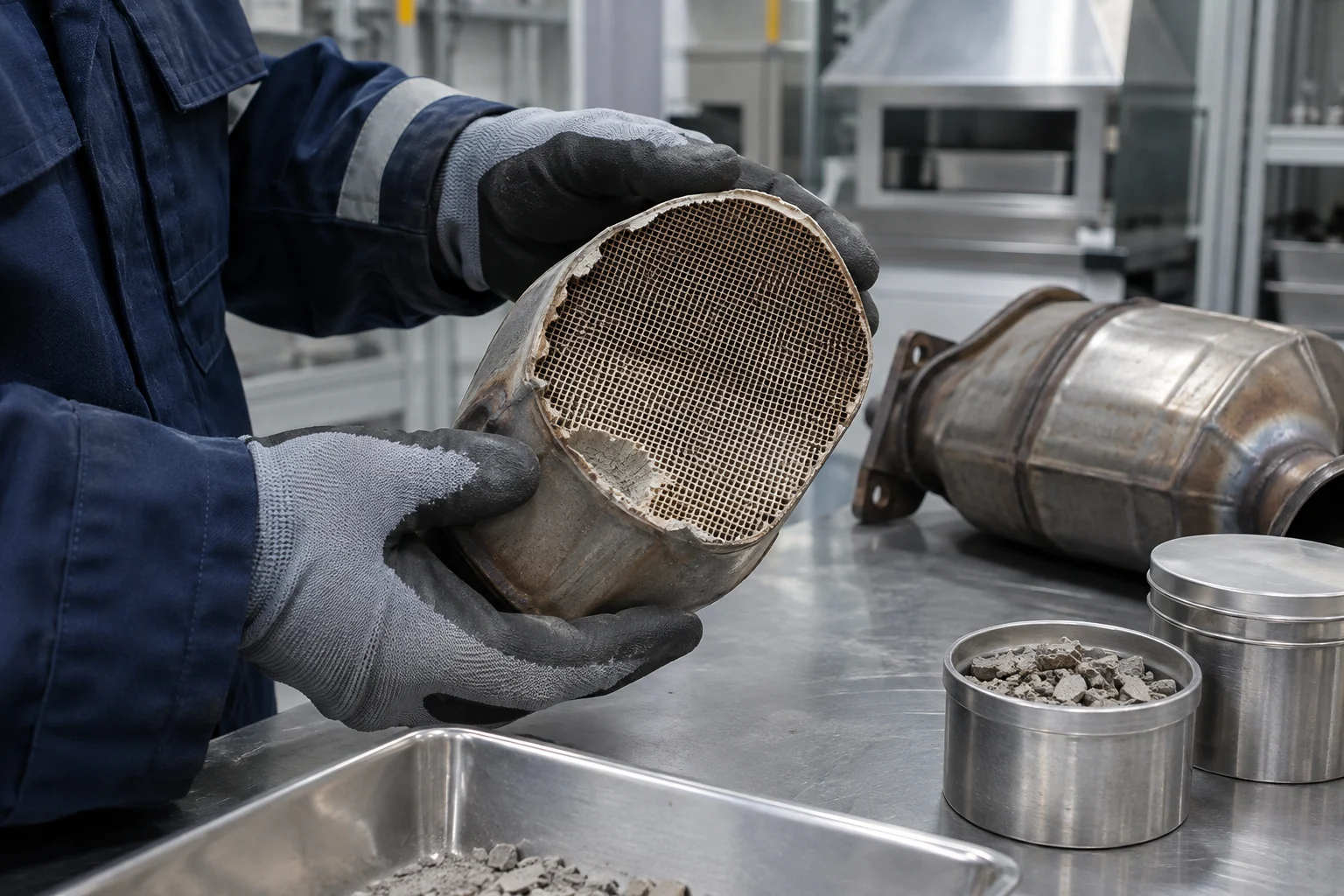
These shifts are difficult to capture in a timeless ranking. For spent automotive catalysts, Ledoux & Co.’s Catalyst Testing service measures relevant platinum group metal content. Learn More About Catalyst Testing when evaluating a lot for settlement.
Why Price per Gram Isn’t the Full Picture
The question “what is the most expensive metal per gram?” requires a specified metal form, usually refined material. It does not describe the payable value of an ore, concentrate, catalyst, or mixed scrap lot. Before estimating a lot’s value, establish:
- Representative content: What metal concentrations does a properly collected sample show?
- Recoverability: Which metals can the proposed process actually recover?
- Commercial terms: What deductions, treatment charges, and payment rules apply?
A small amount of a highly priced metal may yield less than a larger amount of a lower-priced one. Surface appearance and product labels cannot settle that comparison. Use a current quotation only after determining the material’s composition and the contract’s basis for payment.
How Ledoux & Co. Helps Determine True Metal Value
Independent analysis turns a speculative price discussion into a material-specific decision. Ledoux’s Precious Metals Analysis service covers gold, silver, rhodium, and other relevant metals across suitable materials. The laboratory selects a method according to the sample matrix and target elements; ISO 17025-accredited methods apply within their stated scope.

A surface reading can identify possible elements, but settlement may require representative sampling, preparation, and quantitative analysis. Results should state the reporting basis and units so all parties interpret the same figures. Submit a Sample with its material description and requested elements.
