
A palladium catalyst helps chemical reactions proceed through an alternative pathway while the palladium participates in repeated catalytic cycles. Its usefulness depends on how the metal is presented to reactants, not simply on whether palladium is present. Dissolved complexes and supported solids serve different processes, from chemical synthesis to exhaust treatment. Understanding their uses, operating limits, and recoverable metal content helps you make better production and material decisions.
What Is a Palladium Catalyst?
A palladium catalyst uses palladium as an active component to promote a reaction. It can interact with reactants, facilitate bond changes, release products, and participate again. The metal may be dissolved in a molecular complex or distributed over a solid support. The active form can change during use in complex reaction mixtures.
Palladium is useful in hydrogenation, which adds hydrogen to a molecule, and in cross-coupling, which joins molecular fragments through new bonds. A catalyst specification describes metal loading, support, particle distribution, and impurity limits.
Types of Palladium Catalysts
Palladium catalyst types are often grouped by phase. In a homogeneous system, the active palladium species is in the same phase as the reactants, usually dissolved in liquid. In a heterogeneous system, reactants contact palladium on a solid. That difference shapes selectivity, separation, and reuse.
Homogeneous Palladium Catalysts
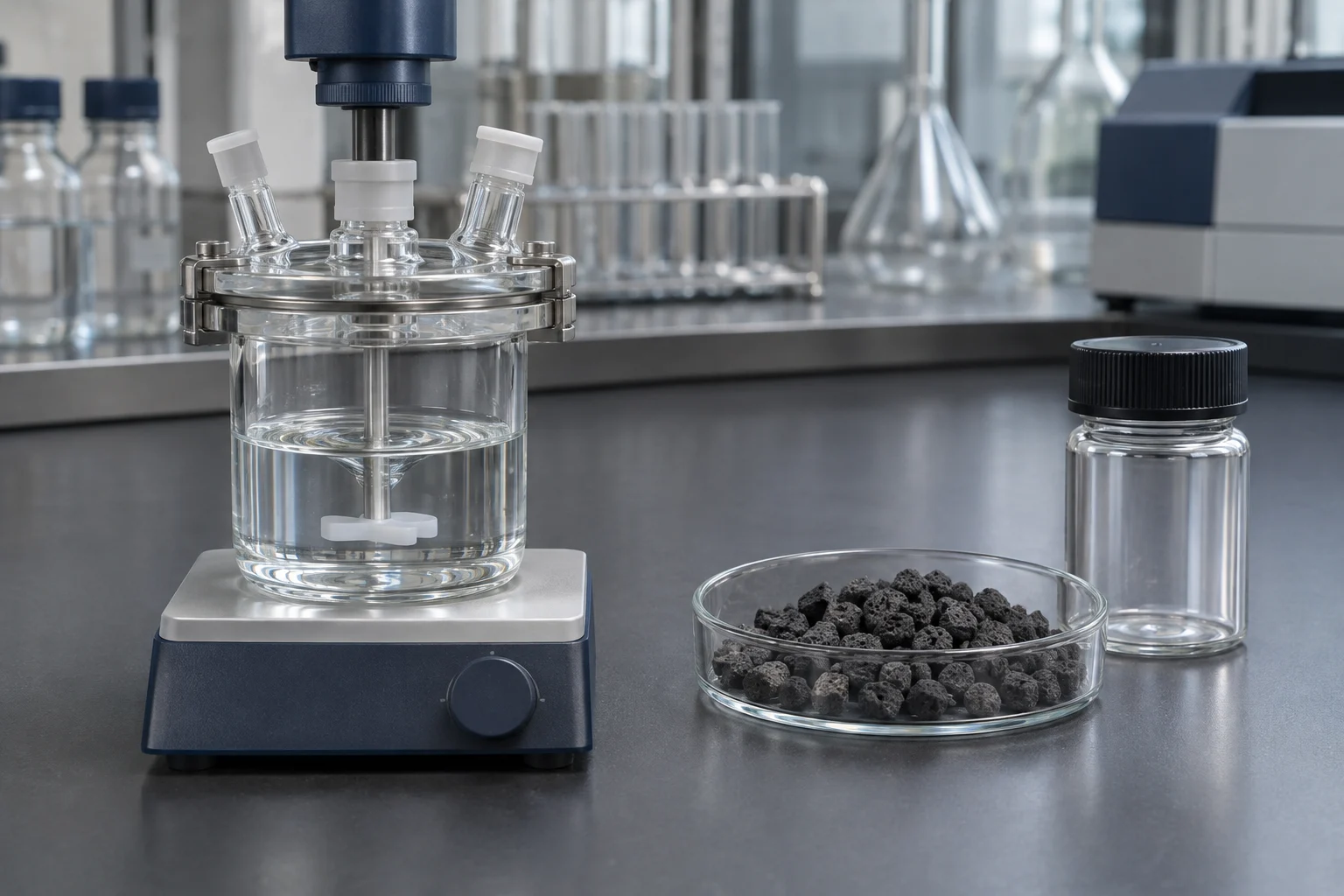
Homogeneous catalysts commonly use soluble palladium complexes with ligands, molecules bonded to the metal that influence its reactivity. Chemists can adjust this environment to favor particular bond-forming steps. Palladium catalyzed cross coupling is especially useful when a synthesis requires precise connections between carbon atoms or between carbon and other atoms. Ligand choice also affects stability under the intended operating conditions.
Because the active species mixes with the liquid, separating it from the product can be difficult. The process may need extraction or a metal removal step. Operators should measure residual palladium where product specifications require it and evaluate recovery over repeated batches.
Supported Palladium Catalysts
Supported catalysts place palladium on a solid such as carbon or an oxide. Palladium on carbon (Pd/C) exposes metal sites for hydrogenation and hydrogenolysis, which breaks bonds using hydrogen. The solid can be filtered from liquid or retained in a fixed bed.
Deposits can cover active sites, metal particles can merge, and palladium can move into the liquid stream. Support properties and palladium distribution influence which molecules reach the metal and how long the material remains active. Support pores restrict access for larger molecules. Compare fresh and spent samples before assuming equal metal loading means equal performance.
Palladium Catalyst Uses
In chemical and pharmaceutical production, palladium catalysts help create carbon-to-carbon and carbon-to-nitrogen bonds. These reactions can build complex molecular structures with controlled selectivity. Supported Pd/C is also used in hydrogenation steps, including transformations that remove protective chemical groups. The catalyst choice depends on the target molecule, feed impurities, product purity, and separation plan.
Palladium also serves in automotive exhaust catalysts. In an appropriate converter formulation, it helps oxidize carbon monoxide and unburned hydrocarbons as exhaust passes over coated surfaces. Other metals and the operating environment affect the overall emissions result.
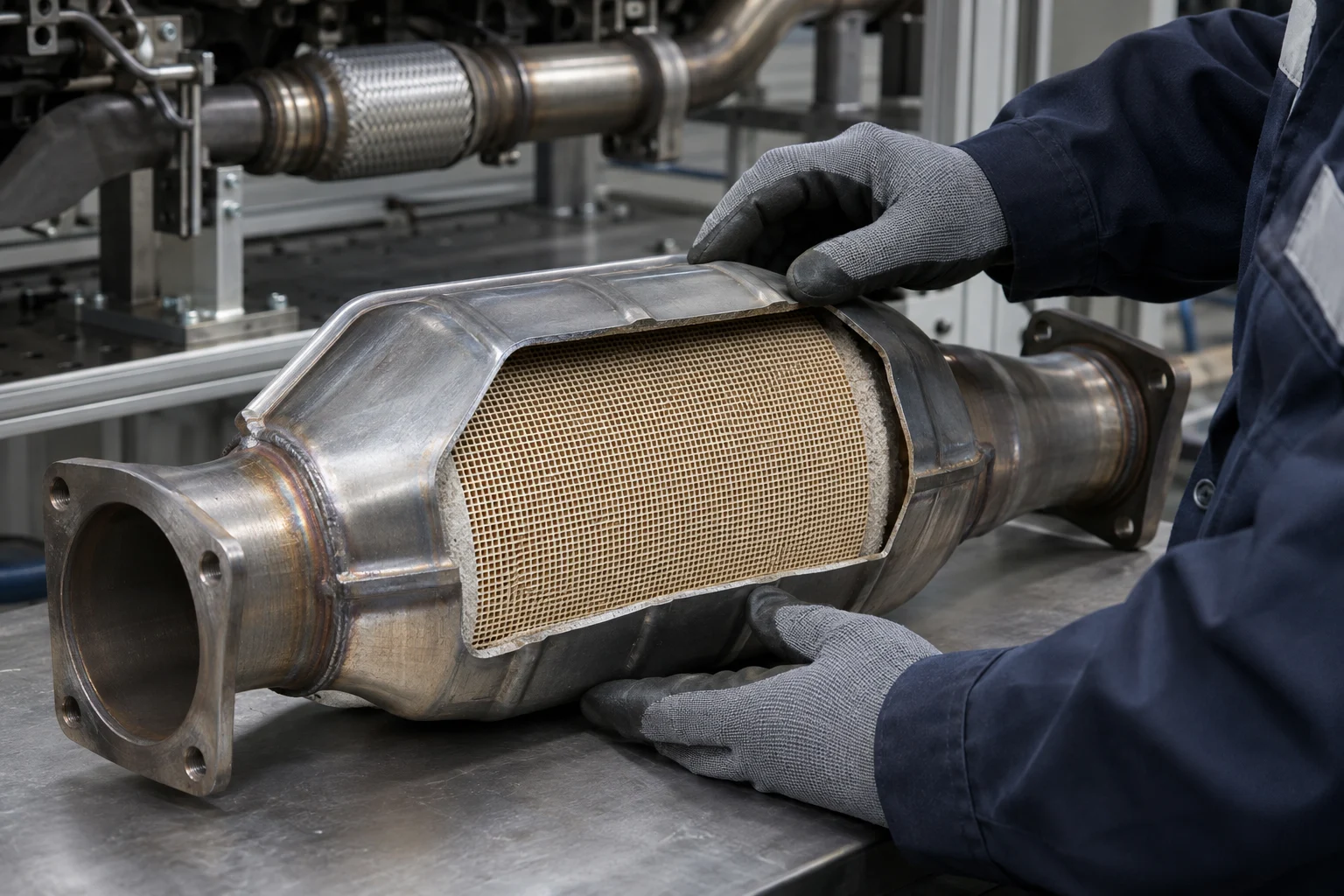
Industrial catalysts may use palladium in additional oxidation or hydrogenation processes. Across these applications, the same metal can perform very different jobs because its form and conditions differ.
What Affects Palladium Catalyst Performance
Catalyst performance includes conversion, the share of reactant consumed, and selectivity, the share directed toward a desired product. Metal content alone cannot establish either measure. Engineers should examine the whole formulation and operating cycle, including:
- Palladium loading and distribution across the support.
- Particle size and access to active sites.
- Temperature, pressure, and feed composition.
- Exposure to contaminants that block or alter sites.
- Stability during repeated runs or continuous service.
Higher loading does not always produce a proportional performance gain. Some metal may be buried or inaccessible, while process conditions may limit how quickly reactants reach the surface. Run controlled activity tests to assess conversion and selectivity.
When precious metal content must be verified separately, Ledoux & Co.’s Catalyst Testing service can provide an independent assay. Explore Catalyst Testing for the specific material and reporting question.
Palladium Catalyst Deactivation and Recovery
A palladium catalyst may lose activity when contaminants cover sites, deposits obstruct pores, or metal particles combine. Palladium can also leach into the surrounding liquid. Investigate the cause before replacing material after low conversion. Metal analysis helps assess whether palladium loss contributed to deactivation.
Spent material can still contain palladium even when its catalytic performance is poor. Its potential recovery value depends on the amount of metal, the material matrix, sampling quality, and processing costs. Keep separate catalyst types and batches identified, then collect a representative sample before requesting an assay.
A qualified recycler or refiner can evaluate recovery options using measured composition. An assay supports valuation; it does not prove that all measured metal can be recovered economically.
Palladium Catalyst Analysis With Ledoux & Co.
Ledoux & Co. analyzes palladium in fresh and spent automotive and industrial catalyst materials, including relevant petrochemical catalysts. Its independent assay results can support specification checks and recycling settlements. Applicable methods are ISO 17025 accredited, and its sampling, inspection, and analysis operations are ISO 9001:2015 certified.
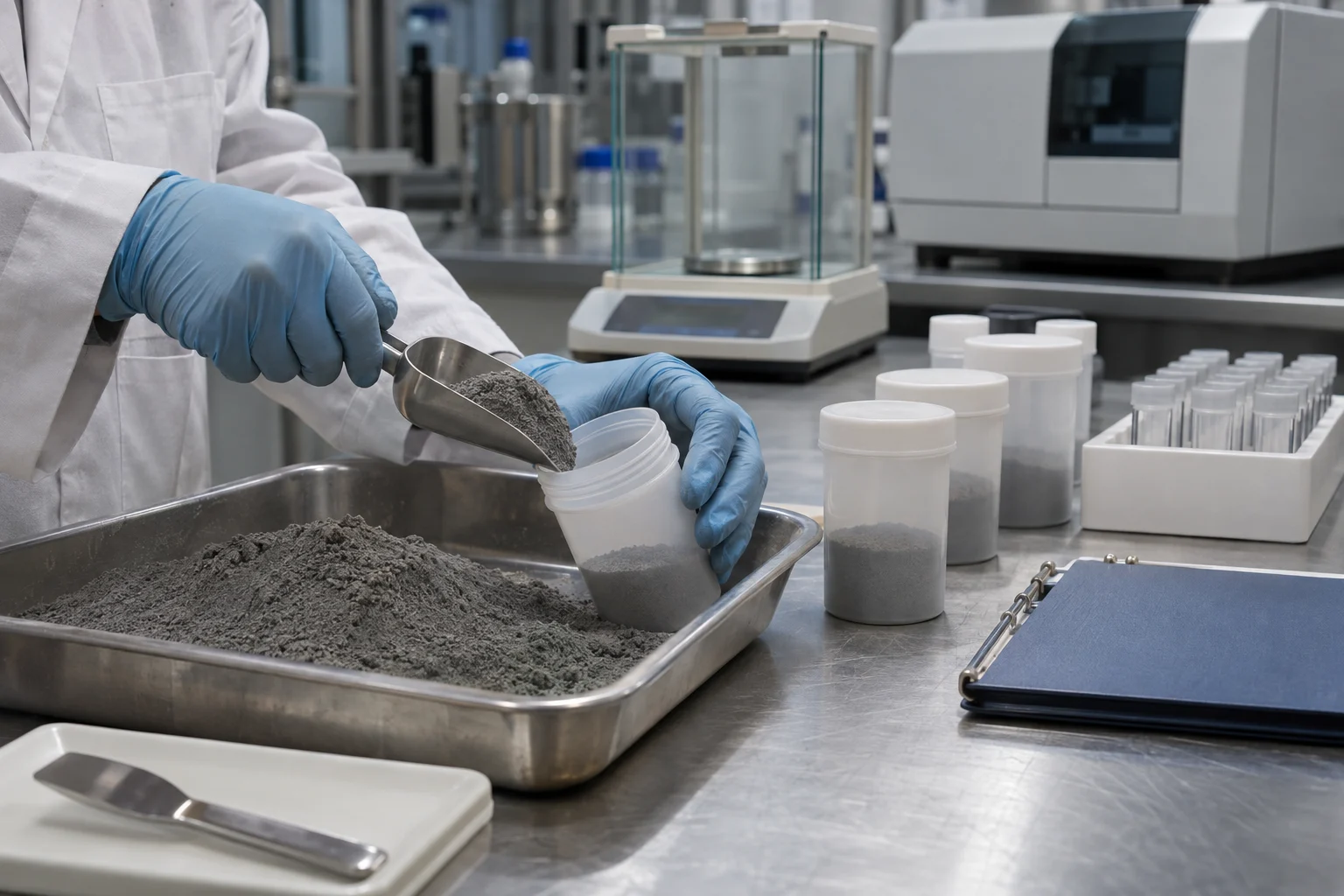
Method selection and preparation should match the sample and reporting purpose. For a catalyst lot, Submit a Sample with the material description, requested elements, and available handling information.
