
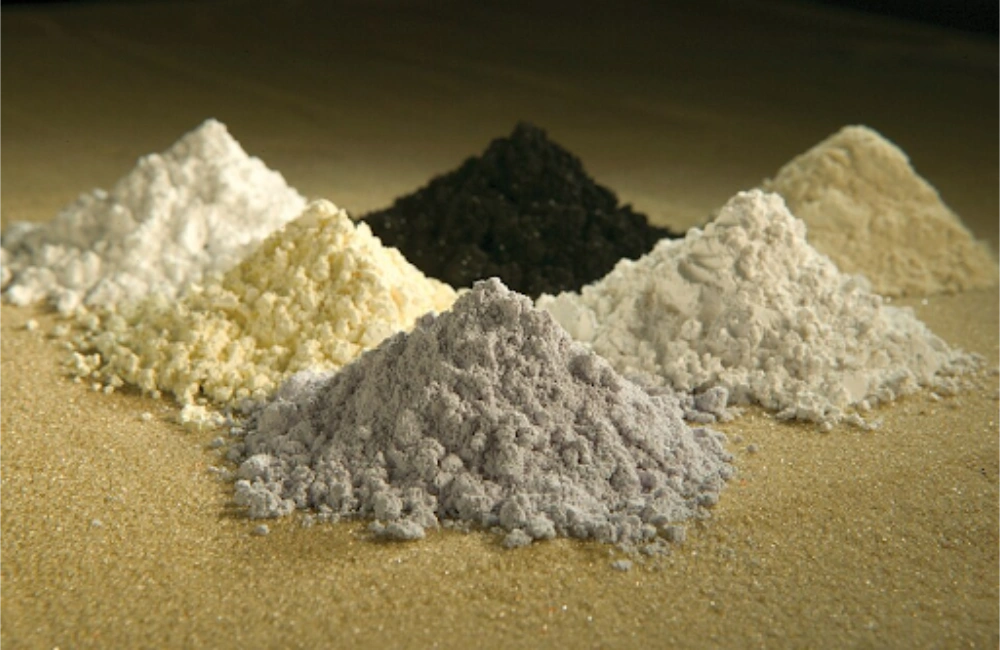
The extraction of rare earth elements (REEs) is the set of metallurgical and chemical processes used to recover rare earth metals from ores, concentrates, or secondary materials. It underpins electric vehicles, advanced electronics, defense systems, and renewable energy technologies.
This guide explains that complexity, the necessity of rigorous metallurgical testing, and how we at Ledoux & Co. support informed extraction route evaluation.
Understanding the Technical Complexity Behind Rare Earth Element Extraction
The extraction of rare earth elements is complex because of challenging mineralogy, chemical similarity among elements, and strict regulatory constraints. Successful outcomes depend on understanding of ore characteristics and the selection of data-driven processing routes.
Geological and Mineralogical Complexity of Rare Earth Ores
Rare earth elements rarely occur in high-grade, standalone deposits, making their extraction challenging from the outset. They are commonly hosted in minerals such as bastnäsite, monazite, xenotime, and ion-adsorption clays, each requiring distinct processing strategies.
Fine grain size frequently limits mineral liberation during crushing and grinding. In many cases, rare earth minerals remain locked within gangue phases, reducing recovery during physical separation.
Additionally, mineralogical variability across a single ore body can result in inconsistent metallurgical performance, complicating process design and scale-up.This increases the reliance on detailed characterization and testing.
Low Grades and Uneven Distribution of Rare Earth Elements
Many rare earth ores contain less than 1% total rare earth oxides (TREO), with valuable elements unevenly distributed throughout the ore body. Low grades amplify sensitivity to recovery losses and increase economic risk.
Accurate mass balance becomes critical to viability, and metallurgical testing helps determine whether beneficiation or direct processing is justified before capital is committed.
Chemical Similarity and Separation Difficulty
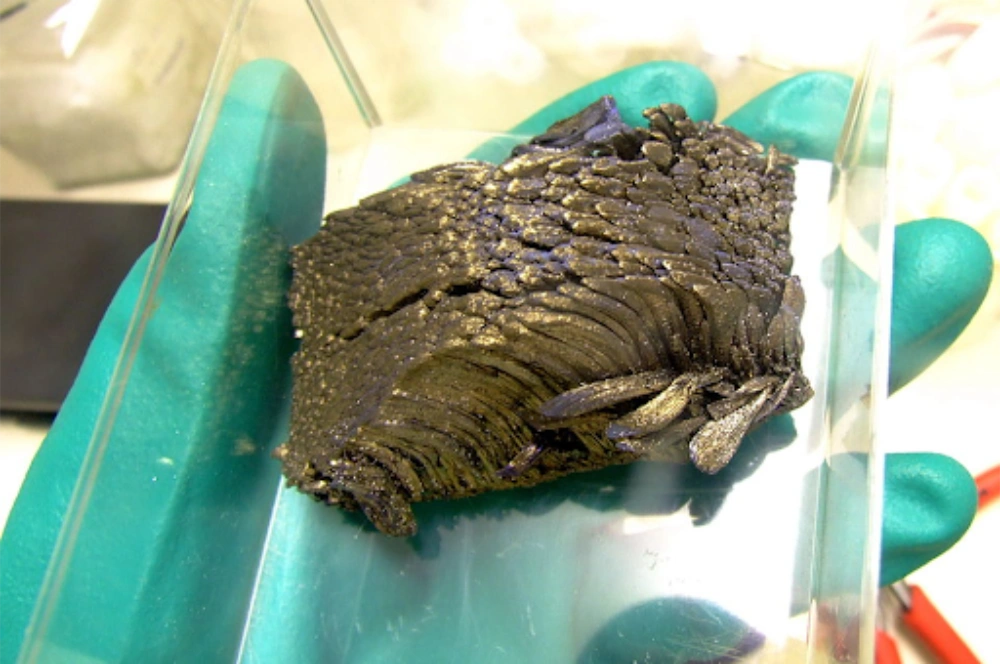
Rare earth elements exhibit nearly identical chemical properties, making selective separation exceptionally difficult. Solvent extraction circuits may require dozens of tightly controlled stages to achieve commercial purity.
Minor deviations in chemistry can significantly impact recovery or product quality, underscoring the need for high-quality analytical data throughout the extraction and separation process.
Presence of Radioactive and Regulated Elements
Many REE-bearing minerals contain thorium and uranium, introducing regulatory, handling, and waste management challenges. These elements increase compliance costs and influence process design decisions.
Early-stage testing and proper characterization identify potential regulatory risks and support responsible, compliant extraction strategies.
Metallurgical Challenges That Impact Rare Earth Extraction Efficiency
The extraction of rare earth elements is affected by geology and metallurgical variables that influence recovery and cost. Understanding these challenges early improves process reliability and scalability.
Variability in Feed Material and Its Impact on Processing
Rare earth feedstocks extend beyond primary ores to include concentrates, tailings, slags, and recycled materials. Chemical composition, moisture content, particle size, and mineral associations can vary widely.
Without representative sampling and characterization, scale-up assumptions become unreliable. Consistent, high-quality sampling is essential for generating meaningful test results and reducing technical risk.
Hydrometallurgical Processing Limitations
Hydrometallurgical performance depends heavily on mineralogy, reagent selection, and operating conditions. Temperature, residence time, and solid-to-liquid ratios must be optimized to balance recovery and cost.
Excessive reagent consumption increases operating expenses, while poor impurity control complicates downstream separation. Laboratory-scale testing identifies optimal leaching conditions before pilot or commercial implementation.
Why Proper Metallurgical Testing Is Essential Before Scale-Up
For the extraction of rare earth elements, metallurgical testing is essential in rare earth extraction because it validates recovery assumptions, reduces scale-up risk, and informs economically viable process selection. It provides the foundation for sound technical and financial decisions. Skipping this step exposes projects to avoidable failures and cost overruns.
Identifying the Right Extraction Route
No single extraction method is suitable for all rare earth materials. Testing determines whether physical beneficiation, direct leaching, roasting, or hybrid approaches are required.
Early, data-driven route selection prevents costly pilot-scale failures and improves recovery, operating efficiency, and overall project economics.

Ensuring Commercial-Grade Analytical Accuracy
Rare earth projects rely on precise elemental analysis to establish accurate mass balances and recovery metrics. Techniques such as ICP and wet chemistry must be validated, traceable, and repeatable.
ISO 17025-accredited analytical data supports financing, offtake agreements, and engineering design, while poor data quality can undermine the entire extraction strategy.
How Ledoux & Co. Supports Rare Earth Extraction Route Evaluation
The extraction of rare earth elements demands independent, technically rigorous support. At Ledoux & Co., we combine metallurgical expertise with accredited analytical capabilities to guide confident decision-making.
Hydrometallurgical Testing and Process Evaluation
We conduct bench-scale leaching and solution analysis to evaluate extraction performance under controlled conditions. Our work includes reagent optimization, condition testing, and tracking both rare earths and impurities.
We support primary ores and recycled feedstocks alike, delivering actionable data that informs process development and scale-up planning.
Advanced Analytical Capabilities
Our laboratories provide ICP-based elemental analysis and wet chemistry for precise concentration measurement. Prepared, representative samples are analyzed using NIST-traceable standards.
This ensures reliable, high-confidence data suitable for metallurgical evaluation and commercial decision-making.
Independent, ISO-Accredited Laboratory Support
With over 145 years of metallurgical expertise, we operate as an independent third-party laboratory. Our systems are ISO 17025-accredited and ISO 9001:2015-certified.
Global manufacturers and refiners trust our unbiased, commercial-grade assays for financial transactions and critical process decisions.
Supporting Recycling and Secondary Rare Earth Sources
We also support the growing need for recycling and secondary rare earth recovery. Our testing covers electronic scrap, catalysts, and other complex secondary materials.
By characterizing challenging feedstocks, we help optimize recycling processes, advance circular economy initiatives, and reduce dependence on primary mining sources.
Key Takeaways
The extraction of rare earth elements is a technically demanding process that requires rigorous testing, accurate analytics, and informed route selection.
At Ledoux & Co., we provide independent, ISO-accredited testing to support extraction route evaluation. Partner with us to build reliable, data-driven rare earth extraction processes.
FAQs
The extraction of rare earth elements often raises technical and commercial questions for businesses entering or expanding in this sector. Below are concise answers to common considerations.
1. Can rare earth elements be economically extracted from low-grade ores?
Yes, but only with optimized processes and accurate mass balance data. Testing determines whether recovery can offset operating and capital costs.
2. How early should metallurgical testing begin in a project?
Testing should start as early as possible, ideally during exploration or scoping stages. Early data reduces technical and financial uncertainty.
3. Are recycled materials viable sources of rare earth elements?
Recycled feedstocks can be viable but are highly variable. Proper characterization is essential to determine process feasibility.
4. Why use an independent laboratory instead of in-house testing?
Independent labs provide unbiased results and accredited data. This credibility is critical for external stakeholders and commercial agreements.


