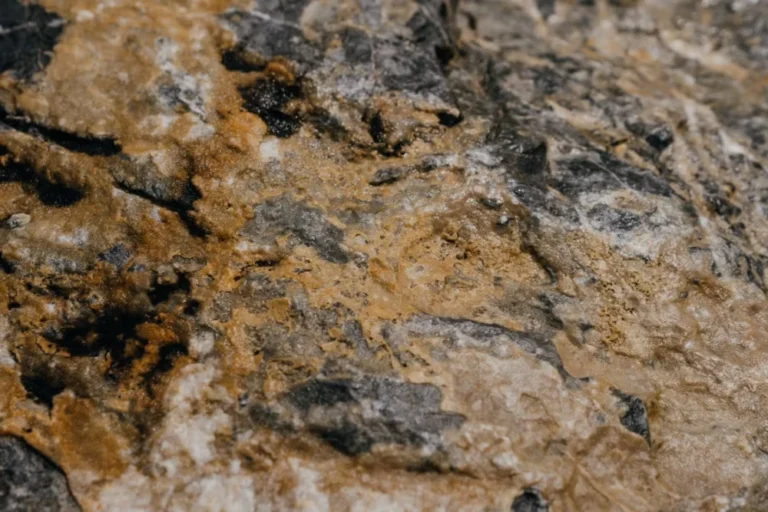

An ore testing laboratory provides essential analytical data driving decisions in mining, refining, and recycling.
As an ISO-accredited facility with over 145 years of experience, Ledoux & Co. delivers accurate testing services that help businesses maximize value, ensure compliance, and make informed decisions.
How Ore Testing Laboratories Support Decision-Making in Metal Industries
An ore testing laboratory supports decision-making by delivering precise metallurgical data, establishing economic viability, optimizing extraction, and ensuring regulatory compliance.
- Provide accurate data: Depending on the material and target elements, labs may use methods such as fire assay, ICP, chemical titration, gravimetry, and XRF screening. to identify precise elemental composition, impurities, and structural variations in raw materials.
- Determine economic viability: Detailed metallurgical testwork and pilot studies establish realistic recovery rates, ore grades, and processing costs to support successful feasibility studies.
- Optimize extraction and reduce waste: Testing determines the optimal grind size and separation techniques to maximize valuable mineral recovery while preventing excessive energy use and waste generation.
- Ensure regulatory compliance: Chemical and environmental assays verify that mining operations meet global environmental and safety standards, particularly concerning toxic tailings and heavy metal contaminants.

Comprehensive Testing Techniques in Modern Ore Testing Laboratories
A modern ore testing laboratory employs diverse analytical techniques to uncover the precise composition of complex ores. These methods range from classical chemical separations to advanced instrumental technologies, ensuring accuracy across various concentrations.
Fire Assay Method
This method is the definitive, globally accepted standard for measuring gold and platinum-group elements.
The process involves rigorous steps:
- Sample preparation and flux fusion.
- Lead collection and cupellation.
- Gravimetric or instrumental weighing of the prill.
It remains vital because the large sample size ensures better representation, making it highly accurate for high-grade and heterogeneous ores.

Wet Chemistry Analysis
This technique dissolves samples in acids and applies redox or titration reactions for quantitative elemental measurement.
It is specifically required for major elements, high-concentration base metals, and specific halogens where instruments have lower precision.
In the laboratory, wet chemistry validates and calibrates instrumental methods, ensuring absolute accuracy for bulk ores.
Instrumental Analysis (ICP, XRF, etc.)
Instrumental analysis delivers rapid, highly sensitive multi-element data. Key technologies include:
- ICP Spectrometry: Inductively Coupled Plasma (ICP-OES and ICP-MS) uses high-temperature plasma to measure multi-element trace compositions after acid digestion.
- X-Ray Fluorescence (XRF): A rapid, non-destructive screening tool that bombards solid samples with X-rays to determine elemental composition.
These techniques deliver fast results, exceptional sensitivity, and low detection limits for large batches.
For Rare Earth Elements (REEs), laboratories use ICP-OES and ICP-MS because these techniques offer the exceptional sensitivity and low detection limits needed to untangle the complex spectral interferences of REEs.
What Materials Can Be Tested in a Laboratory
An ore testing laboratory can test various materials, specifically precious metal ores, base metal ores, and rare earth element ores, each requiring unique considerations.
Precious Metal Ores
Target elements include gold, silver, platinum, palladium, and rhodium evaluated across diverse geological ore forms.
Grade variations dictate the methodology: high-grade ores require classic fire assay cupellation, while low-grade ores utilize ultra-precise ICP-AES instrumental analysis.
Baseline composition data directly impacts extraction economics, dictating downstream hydrometallurgical or pyrometallurgical recovery methods to maximize profit margins.

Base Metal Ores
This category focuses on quantitative extraction profiling for copper, lead, zinc, nickel, and cobalt mining operations. Accurate elemental detection prevents smelter penalties and guarantees final market-grade purity.
Ledoux & Co. is internationally recognized for our Ledoux Copper Concentrates Testing, offering multi-stage homogenization and ISO 17025 accredited element certifications.
Rare Earth Element Ores
These elements are critical for powering clean energy magnets, EV mobility, aerospace electronics, and defense infrastructure.
Matrix challenges are significant; severe spectral overlaps and chemical similarities among the 15 lanthanides require complex extraction chemistry.
Overcoming these requires the strict utilization of high-resolution ICP-MS instruments coupled with specialized acid digestion protocols.
How Laboratory Accreditation Impacts the Reliability of Ore Analysis
An ore testing laboratory accreditation directly impacts the reliability of ore analysis by enforcing rigorous technical competence, quality management systems, and globally recognized measurement traceability.
- ISO 17025 Accreditation: The global benchmark for testing laboratories, confirming technical competence, impartiality, and consistent operations. It ensures reliability through equipment calibration, validated methods, measurement traceability, and staff proficiency.
- ISO 9001:2015 Certification: Establishes an organization-wide commitment to standard quality management system (QMS) principles. It optimizes customer satisfaction, documentation, and operational consistency across all business departments.
- Impact on Result Reliability: Accreditation supports accurate, repeatable, and globally recognized. This structural defensibility makes results directly acceptable for legal proceedings, customs clearance, and high-value financial transactions.
Ledoux holds both ISO 17025 and ISO 9001:2015 certifications. As an affiliate member of LBMA/LPM, our commercial-grade assays are trusted for umpire, control, and financial exchange purposes.
Comprehensive Ore Testing Solutions from Ledoux & Co.
For over 145 years, Ledoux & Co. has provided independent, unbiased metallurgical analysis to industries worldwide. Our comprehensive solutions are tailored to meet the exacting demands of diverse mineral matrices.
Copper Concentrates Testing
We specialize in analyzing copper, gold, and silver content in copper concentrates with meticulous precision.
Our process requires 100-grams of 70-mesh ground material per sample to ensure a homogeneous, representative sample that accurately reflects the whole lot. Utilizing our ISO 17025 accredited methodology, we deliver precision results every time.
Precious Metals Analysis
From bullion to trace levels, our comprehensive approach tests precious metals accurately. Simply relying upon an XRF reading is not nearly enough; we determine the most appropriate testing method based on material type and elements to be tested.

Our expertise spans fire assay, ICP, and chemical titration methods, ensuring commercial-grade assays that reflect scientific truth.
Rare Earth Elements Analysis & Testing
We offer specialized services for ores, concentrates, and intermediates containing rare earth elements.
Our use of ICP-OES and ICP-MS with optimized digestion ensures complete dissolution and representative data. NIST-traceable controls and ISO 17025 compliance ensure accuracy.
Additionally, we provide field and verification services for all clients, including on-site representation and certified reporting, treating your material like our own.
Key Takeaways
The challenge of uncertain mineral value and regulatory risk in the mining industry necessitates precise, dependable analytical data from a trusted ore testing laboratory.

Ledoux’s 145+ years of experience, ISO 17025 accreditation, and ISO 9001:2015 certification ensure reliable results. Our comprehensive testing methods cover precious metals, base metals, and rare earth elements.
Contact Ledoux & Co. today to discuss how our testing services can support your business needs.
FAQs
Here are frequently asked questions regarding how an ore testing laboratory operates and ensures accurate outcomes.
1. Why is a 70-mesh grind size required for copper samples?
A 70-mesh grind helps create a more homogeneous sample, which supports more representative analysis. Ledoux’s copper concentrate testing guidance asks for 100 grams of 70-mesh ground material per sample.
2. What does “umpire assay” mean?
An umpire assay is an independent analysis used to help resolve a disagreement between parties over metal content. Whether the result is final or binding depends on the commercial agreement between the buyer and seller.
3. How does on-site representation protect my material value?
On-site representation give clients independent observation during weighing, sampling, and processing steps. This ensures all processing steps are documented and compliant.
4. What are NIST-traceable standards?
NIST-traceable standards are reference materials whose measurements link directly to the National Institute of Standards and Technology. Using them ensures our analytical equipment is calibrated to the highest level of national accuracy.
5. How quickly can an ore testing laboratory return results?
Turnaround times vary depending on matrix complexity and the specific testing methods required. However, we prioritize prompt turnaround times without ever compromising our rigorous quality control procedures.