An iso/iec 17025 accredited testing laboratory is a laboratory formally proven to produce accurate, reliable, and technically valid test results. Laboratory accuracy directly impacts material valuation, commercial settlements, and stakeholder trust, while non-accredited testing increases financial and regulatory risk.
This article explains how ISO/IEC 17025 applies to metals, catalysts, recycled materials, and why it matters.
What Is an ISO/IEC 17025 Accredited Testing Laboratory?
An ISO/IEC 17025 accredited testing laboratory demonstrates verified technical competence for specific analytical methods and materials.
What ISO/IEC 17025 Accreditation Really Means?
ISO/IEC 17025 is an international standard confirming a laboratory’s technical competence. It ensures test results are accurate, repeatable, and scientifically valid.
The standard applies to testing, calibration, and sampling, not just documentation. Its core focus is how data is produced, verified, and reported.
Core Requirements of an ISO/IEC 17025 Accredited Testing Laboratory
Accredited laboratories use validated analytical methods and maintain detailed documentation.
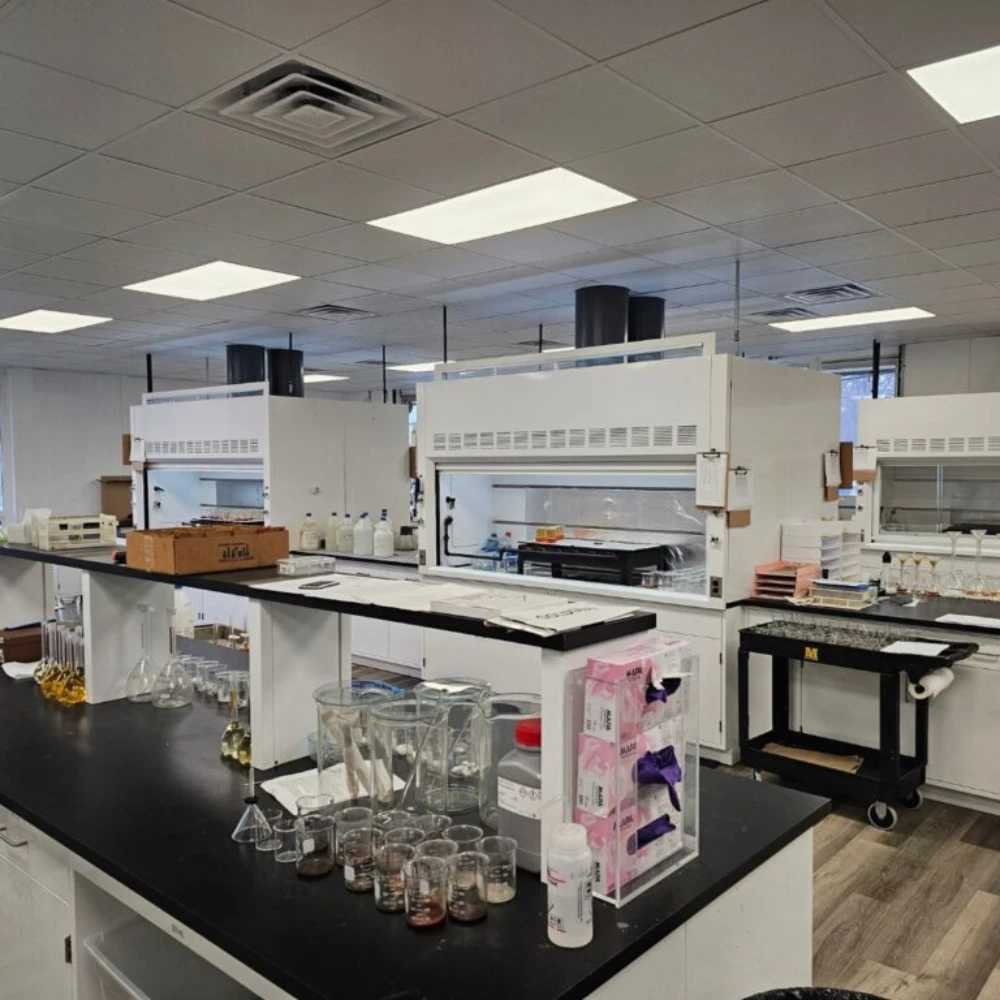
Analysts must be trained and qualified for each method. Environmental conditions are controlled to prevent contamination or bias. Performance is continuously monitored through audits and quality reviews.
Accreditation Bodies and Global Recognition
Accreditation is granted by recognized national bodies such as ANAB, A2LA, and UKAS. These organizations conduct regular third-party audits to confirm continued compliance with ISO/IEC 17025 requirements.
Through the ILAC Mutual Recognition Arrangement (MRA), accredited results are accepted internationally. This global recognition supports cross-border trade, contract settlements, and dispute resolution.
Why ISO/IEC 17025 Accreditation Is Critical for Metals Testing?
An iso/iec 17025 accredited testing laboratory protects financial value and reduces disputes in high-stakes metals analysis..
Financial Accuracy in Commercial-Grade Assays
In precious metals and concentrates, analytical results determine settlement values and payment amounts. Even small analytical errors can translate into significant financial discrepancies at scale.
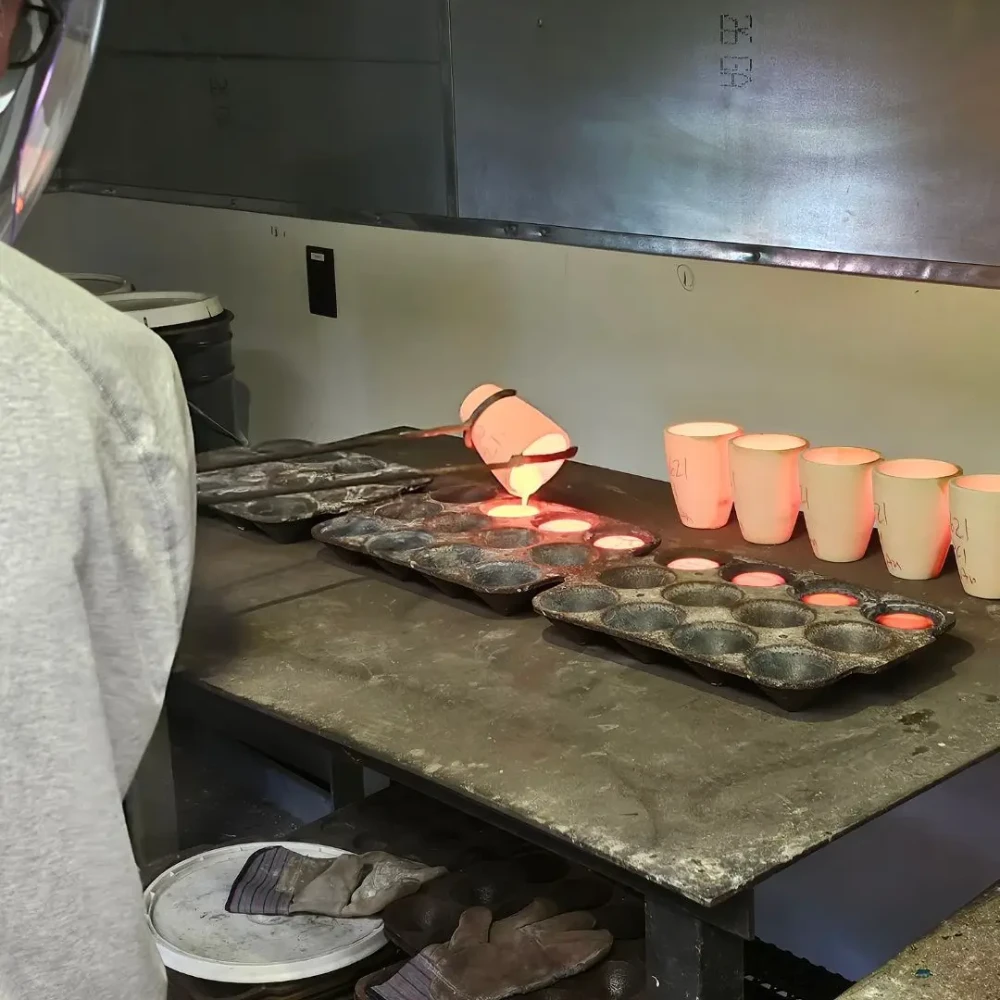
ISO/IEC 17025 accreditation ensures results are technically defensible and suitable for financial transactions. Buyers, sellers, and refiners can rely on the data for commercial decision-making.
Risk Reduction Across the Supply Chain
Accredited testing reduces disputes between buyers, sellers, and processors. It minimizes the need for umpire assays and retesting. Results serve as trusted third-party data in arbitration. Transparency is improved for complex, high-value materials.
Regulatory, Customer, and Quality Compliance
Many contracts require ISO/IEC 17025 data. Accreditation supports ISO 9001 quality systems and demonstrates due diligence during audits. It helps organizations maintain regulatory compliance and long-term customer trust.
What to Look for in an ISO/IEC 17025 Accredited Testing Laboratory
Selecting the right iso/iec 17025 accredited testing laboratory requires evaluating scope, experience, and quality controls. Accreditation alone does not guarantee suitability for every material.
Understanding the Scope of Accreditation
Accreditation applies only to specific methods and materials. Not all tests offered by a lab are accredited. Customers should confirm their required analysis is included. Clear scope disclosure signals a reputable laboratory.
Experience With Your Material Type
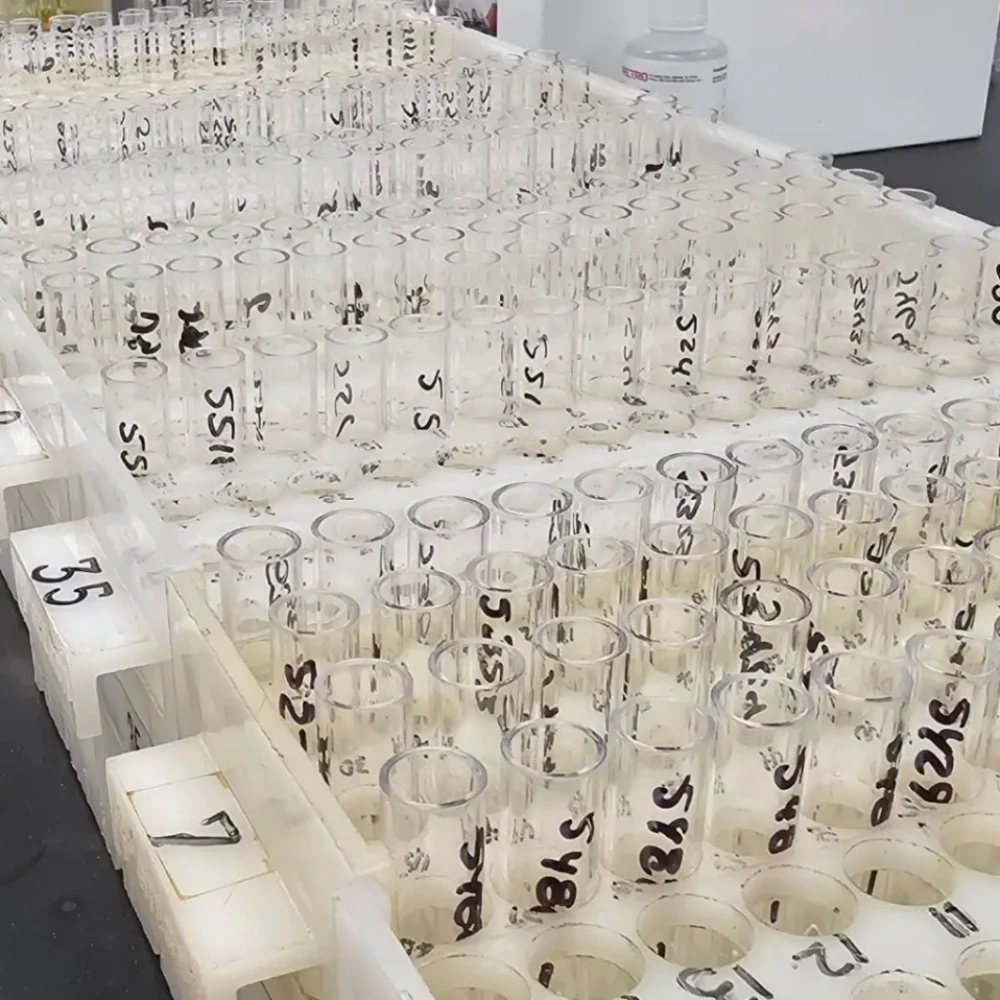
Different materials require different preparation and analysis. Ores, concentrates, and bullion demand distinct workflows. Catalysts and electronic scrap involve complex, variable matrices. Experience improves accuracy and turnaround time.
Quality Control, Sampling, and Traceability
Representative sampling is essential for valid results. Accredited labs use NIST-traceable reference materials. Routine quality checks and proficiency testing are mandatory. Clear reporting of uncertainty supports informed decisions.
Common Misconceptions About ISO/IEC 17025 Accreditation
An iso/iec 17025 accredited testing laboratory is often misunderstood. Clarifying these misconceptions helps stakeholders make better decisions.
ISO/IEC 17025 vs ISO 9001
ISO 9001 focuses on quality management systems and process consistency. ISO/IEC 17025 focuses on technical accuracy, method validation, and data reliability.
A laboratory can be ISO 9001 certified without demonstrating technical competence. Together, the two standards provide stronger assurance than either alone.
Accreditation Alone Is Not Enough
Accreditation does not replace hands-on experience with specific materials. Complex or novel materials may require custom method development beyond standard procedures.
Skilled interpretation of results remains essential, particularly for heterogeneous or unconventional samples. Independence and integrity are equally critical to trustworthy testing.
How Ledoux & Co. Delivers ISO/IEC 17025 Accredited Results
At Ledoux & Co., our iso/iec 17025 accredited testing laboratory combines rigorous standards with deep metallurgical expertise. We deliver data customers can trust for high-value decisions.
Our ISO/IEC 17025 Accreditation and Quality Commitment
Our laboratory operates under strict ISO/IEC 17025 requirements, verified through regular third-party audits. Methods are validated for accuracy, precision, and repeatability.
Each result is supported by documented quality controls, ensuring confidence from sample receipt through final reporting.
Precious Metals Analysis
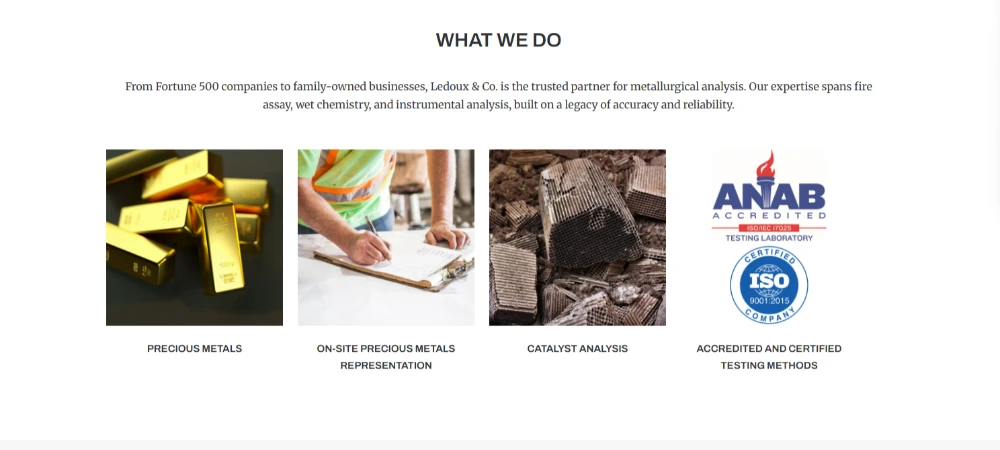
We provide analysis for gold, silver, platinum, palladium, and rhodium. Our capabilities include fire assay, wet chemistry, and advanced instrumental methods.
Commercial-grade assays support financial settlements and are trusted by refiners, traders, and manufacturers worldwide.
Catalyst Testing Services
Our testing covers spent automotive catalysts, including monoliths, diesel catalysts, and wash coats. We also analyze industrial, reforming, VAM, and fresh catalysts.
Accurate determination of precious metal content supports valuation, recycling, and recovery decisions.
Copper Concentrates, Electronic Scrap, and Complex Materials
We analyze copper concentrates for Cu, Au, and Ag to support smelting and trading decisions. Electronic scrap testing addresses both precious and base metals.
Complex matrices are handled using validated digestion and separation methods, delivering reliable data for recycling operations.
ISO/IEC 17025 Accredited Rare Earth Elements Analysis & Testing
Our ISO/IEC 17025 accredited methods deliver accurate, repeatable elemental data for complex rare earth element materials. Testing supports correct valuation, process optimization, and regulatory compliance.
Quality assurance is maintained through NIST-traceable standards, internal QA/QC checks, and ongoing proficiency testing. When standard methods are unsuitable, we develop and validate custom approaches.
Independence, Experience, and On-Site Representation
Founded in 1880, we are an independent and unbiased laboratory acting solely in our customers’ interests. Our team brings over 145 years of metallurgical expertise.
We also provide on-site weighing and sampling representation, ensuring integrity from the point of origin.
Key Takeaways
ISO/IEC 17025 accreditation ensures reliable, traceable, and defensible laboratory results. It protects material value while reducing financial and operational risk. Accreditation matters, but experience and independence matter just as much.
At Ledoux & Co., we combine ISO/IEC 17025 accreditation with more than 145 years of expertise. Partner with us for clarity, confidence, and accuracy.
FAQs
The iso/iec 17025 accredited testing laboratory standard raises common questions about accuracy, scope, and value. These answers address key concerns concisely.
1. Does ISO/IEC 17025 accreditation apply to all tests a lab performs?
No. Accreditation applies only to specific methods and materials listed in the laboratory’s scope. Customers should always confirm coverage for their required analysis.
2. Are ISO/IEC 17025 results accepted internationally?
Yes. Through the ILAC MRA, results from accredited laboratories are recognized globally, supporting international trade and dispute resolution.
3. Can non-accredited results be used for settlements?
They can be used, but they carry higher risk. Accredited results are far more defensible in financial, contractual, and regulatory contexts.